Who Do the Sno Stone Heads Represent?
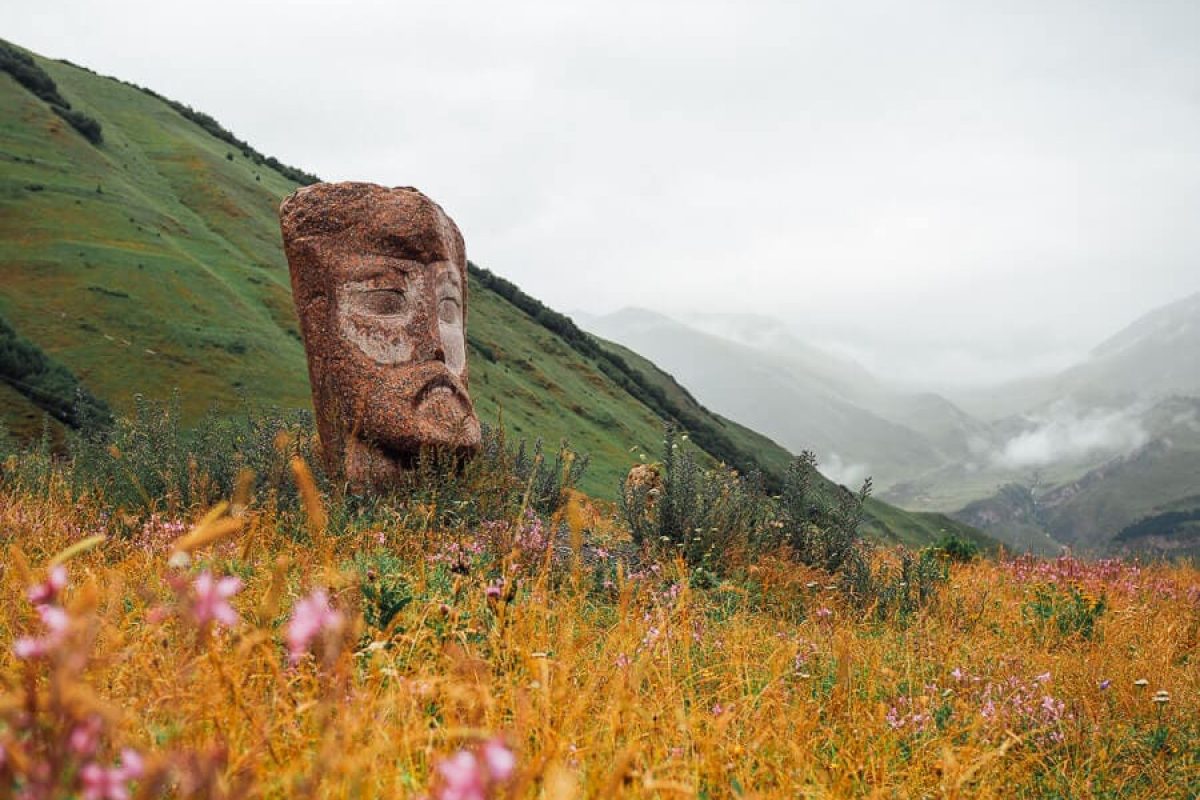
Among the best-known portraits are Shota Rustaveli, Ilia Chavchavadze, Akaki Tsereteli, Vazha-Pshavela, and Alexandre Kazbegi. A representation of Jesus Christ was added later. The individual heads are carved from large single blocks of stone.
Most of these figures are central to Georgian literature. Knowing even a little about them makes the site considerably more interesting.
For international visitors, Vazha-Pshavela and Alexandre Kazbegi are particularly relevant. Both are closely associated with literary representations of Georgia’s mountain communities, landscapes, traditions, and social codes. That creates a direct connection between the portraits and the mountain environment in which they stand.
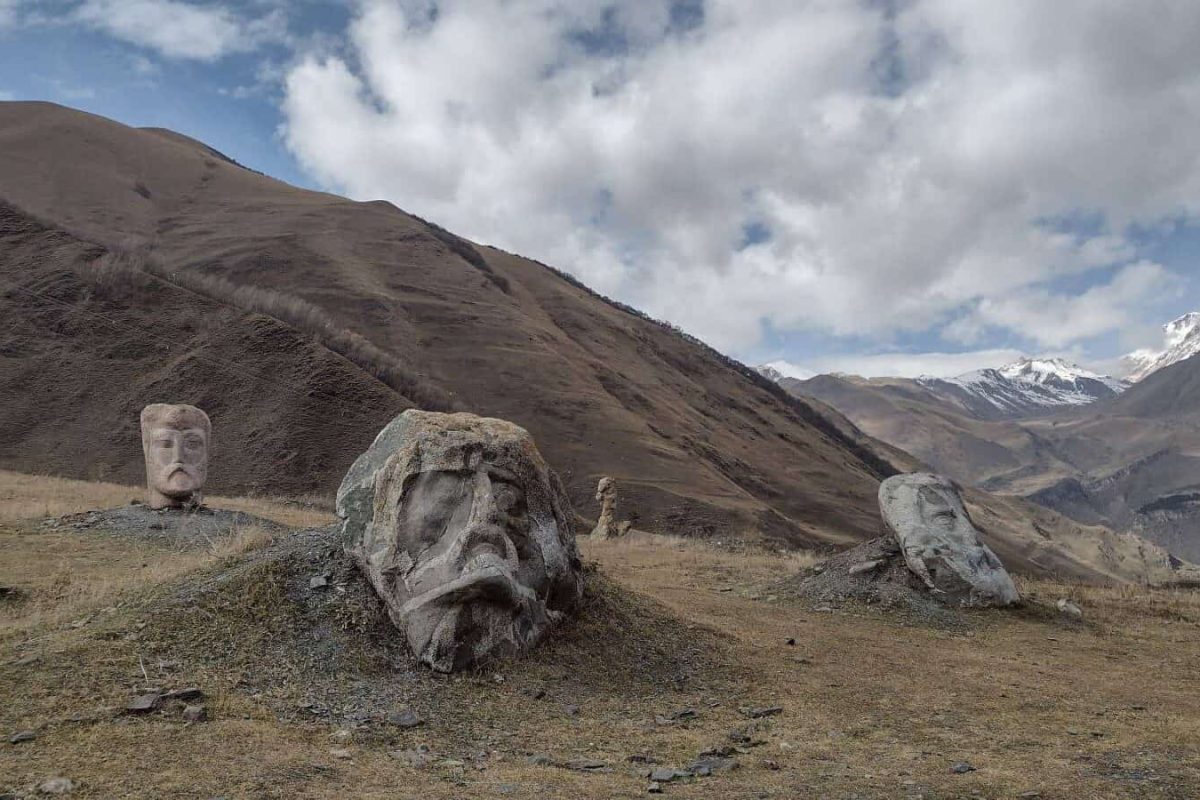
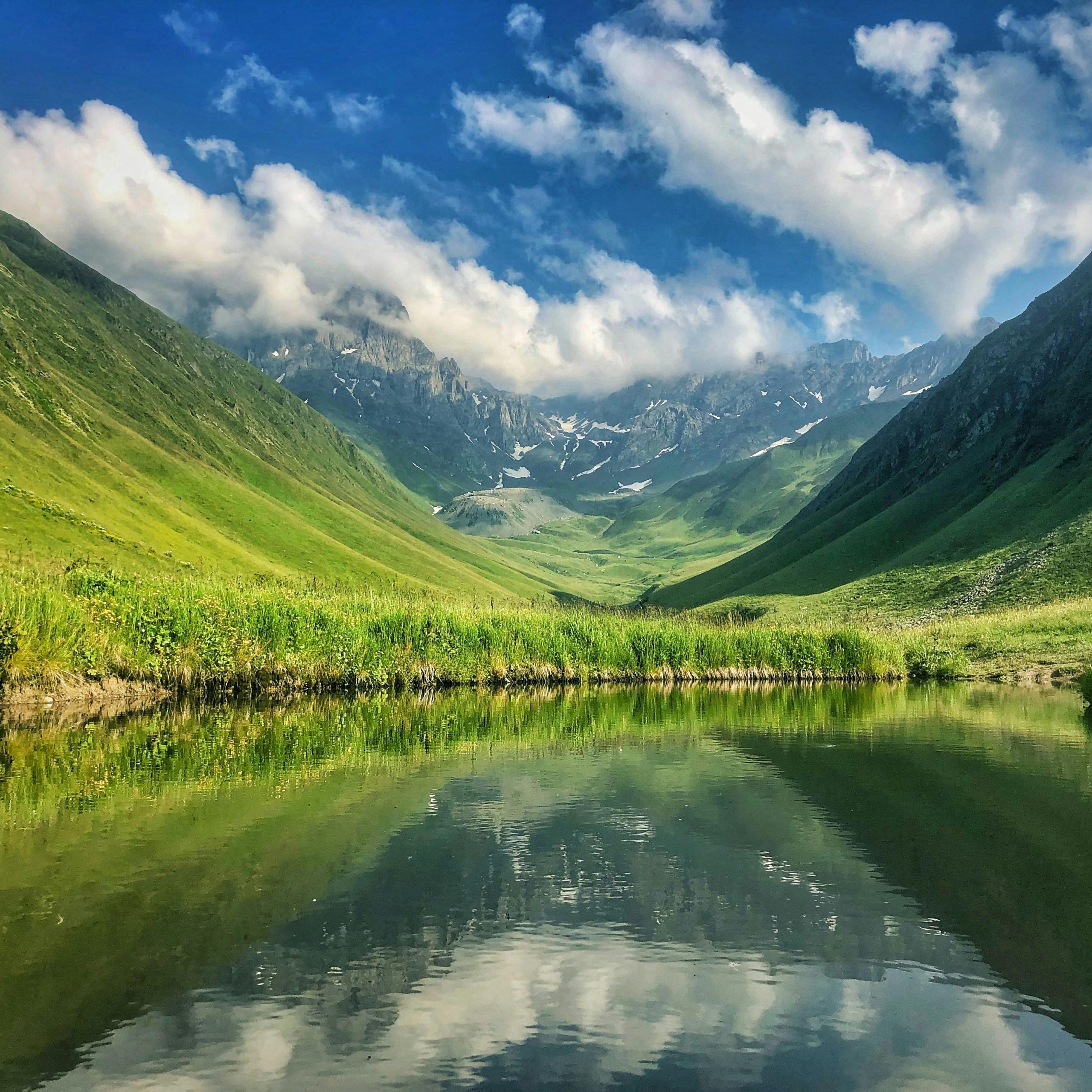
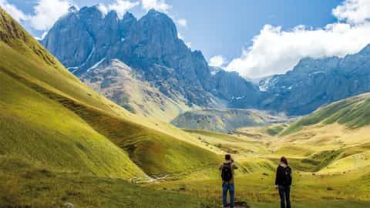
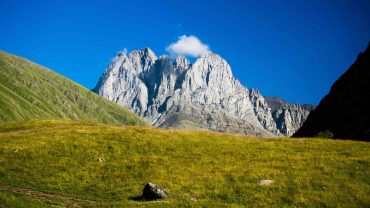
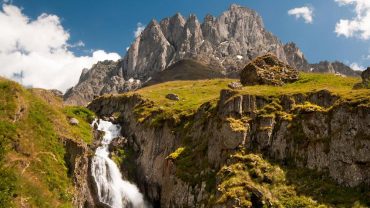
There is no conventional gallery around the sculptures. The heads sit directly in grassland, with hills and mountains behind them. In summer, tall grass can grow around the bases; in winter, snow and exposed ground completely change the character of the site.
Who Created the Sno Stone Heads?
The project was created by Merab Piranishvili, a sculptor from Sno. Available biographical accounts state that he graduated from the Tbilisi Academy of Arts in 1977 and later returned to his home village, where he began producing monumental stone sculptures.
His broader idea has been to develop a much larger open-air sculptural collection celebrating Georgian cultural and historical figures.
For that reason, the Sno Stone Heads are better understood as an ongoing artistic project rather than a finished historical complex.
How to Get to the Sno Stone Heads
Sno village is located roughly 8 kilometres from Stepantsminda. From the Georgian Military Highway, the road turns into the Sno valley and continues towards Juta.
The Sno Stone Heads stand in open ground near the approach to the village, so they are relatively easy to spot. A car or private transfer is the simplest way to visit, particularly if you are continuing towards Juta afterwards.
Around 20–30 minutes is enough for the sculptures themselves. Allow closer to an hour if you also want to see Sno Fortress and walk through part of the village.
Best Time to Visit
The sculptures are accessible throughout the year, but the setting changes significantly with the seasons. Spring and summer bring green fields. By autumn, the grass turns yellow and brown, while winter can cover the area in snow.
Because the Sno Stone Heads stand completely outdoors, there is little protection from strong sun, rain, or wind. Dress for mountain weather rather than for a museum visit.
The most useful thing to know before arriving is also the simplest: do not look at these faces as mysterious ancient relics. Their appeal comes from the opposite idea. This is contemporary Georgian sculpture placed directly into a working mountain village, where modern art, local landscape, and older history occupy the same small valley.



Comment (0)