Sno Fortress
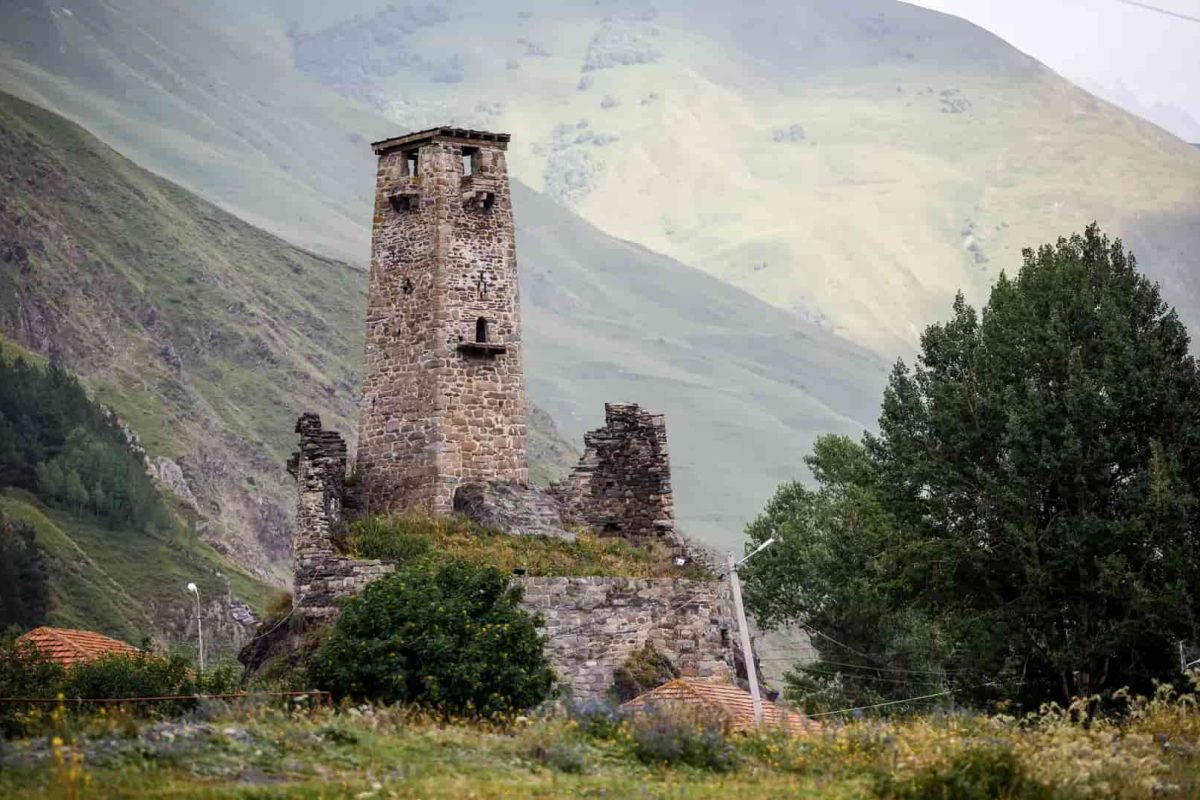
Sno Fortress is the village’s most important historical structure. It dates to the 16th century and stands on a rocky outcrop above the settlement. The identity of its builder is unknown, but its military purpose is clear.
The fortress served as the main defensive position of the valley. From here, its defenders could control the Snostskali Valley and routes leading towards Khevsureti, Pshavi, and Mtiuleti through the Gudamakari area.
The complex itself is relatively small. It consists of a tower and an almost circular defensive wall built with stone and slate. Gun openings and defensive holes remain visible in the structure.
That scale is worth noticing. Sno Fortress was not a grand royal castle. It was a compact defensive installation built to protect a strategic mountain corridor.
Wear shoes with decent grip if you walk around the rocky hill. The approach is not a polished heritage-site path, and wet conditions can make stone and soil slippery.
Vakhtang Gorgasali Church
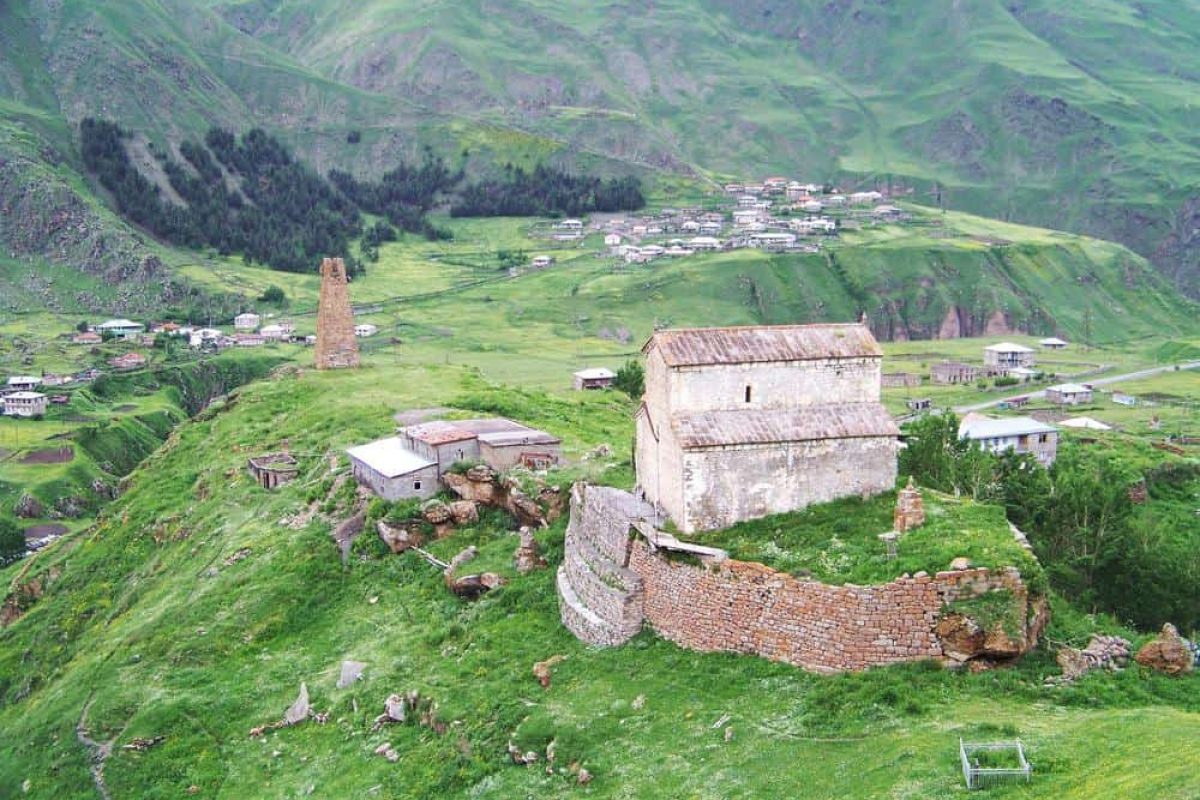
Near the entrance to the village stands Vakhtang Gorgasali Church. The present church was built in 1987 on the foundations of an older religious building.
This distinction is useful when reading the village. The church is modern, while the fortress is several centuries older. Local tradition connects Sno with King Vakhtang Gorgasali, one of the best-known rulers of early medieval Georgia.
Sno is also associated with Catholicos-Patriarch Ilia II of Georgia. His secular name is Irakli Ghudushauri-Shiolashvili, and the village is linked to his family background.
The Stone Heads of Sno
For many international visitors, the most immediately recognizable feature of Sno Village is its collection of large stone heads. These monolithic portrait sculptures depict notable figures from Georgian history and culture.
One point should be made clearly: the stone heads are modern artworks, not ancient archaeological objects. They should not be described as part of Sno’s medieval heritage.
That contrast is actually what makes the village interesting. A 16th-century fortress stands within sight of contemporary stone portraits, while ordinary village life continues around both.
How to Visit Sno from Stepantsminda
Sno Village is only about 8 kilometres from Stepantsminda and is easy to reach by car. It also sits on the road towards Juta, making the two destinations straightforward to combine.
If you are already driving to Juta, allow around 45–60 minutes for Sno rather than stopping for a single photograph. That gives you enough time to see the fortress, walk around the church, and look at the village from different angles.
Even in summer, the valley can feel cool when the wind picks up. Winter changes the conditions completely, with snow and ice affecting access around slopes and unpaved areas. Official guidance for winter mountain activities in Kazbegi recommends using certified local guides where conditions require it.
Sno Village works well because it does not depend on one major attraction. In less than an hour, you can see how military history, religious tradition, modern sculpture, and everyday mountain life occupy the same small valley.




Comment (0)