Ushguli Is a Community, Not a Single Village
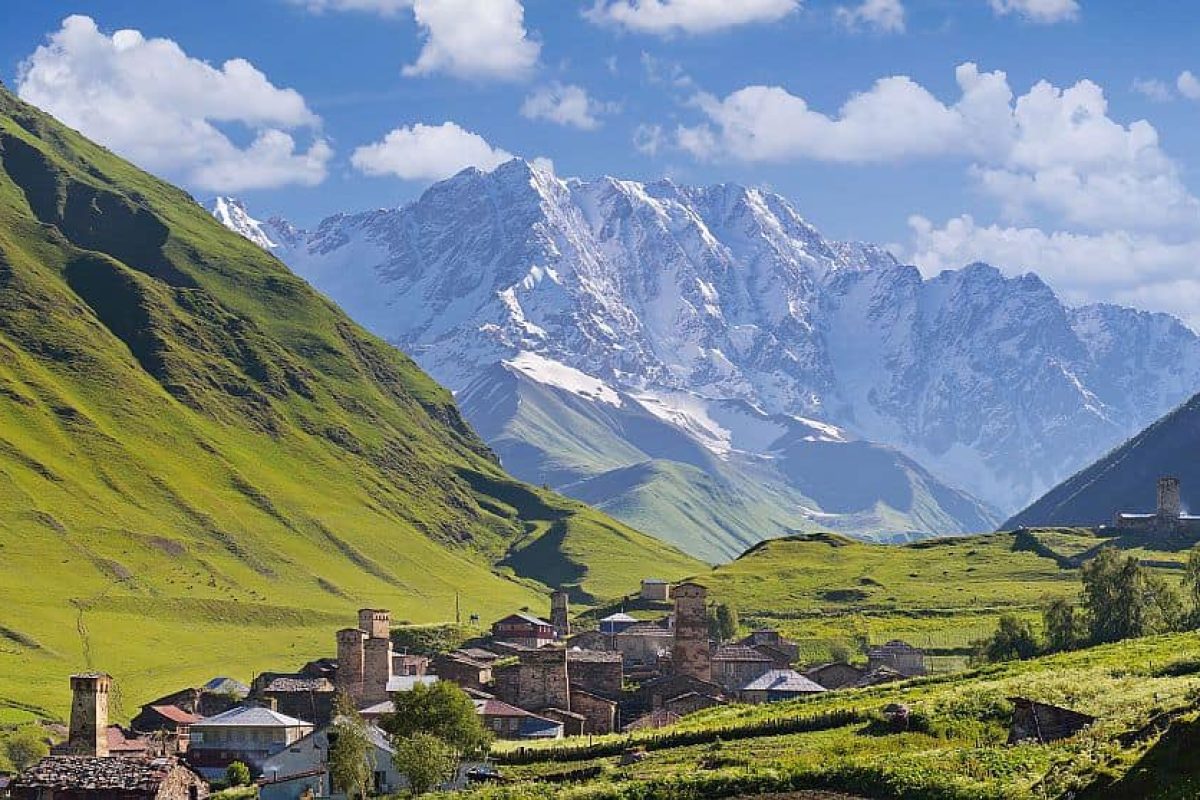
One useful detail to know before arriving is that Ushguli is not one compact village.
UNESCO documentation identifies historic settlements within the Ushguli community including Chazhashi, Zhibiani, Chvibiani, and Murqmeli. They sit close together, and visitors often move between them without realizing they have crossed from one settlement into another.
This is why Ushguli works best on foot. Instead of looking for one central attraction, walk between the villages and pay attention to how towers, houses, churches, courtyards, and narrow tracks fit together.
Ushguli and UNESCO — What the Status Actually Means
You will often read that “Ushguli is a UNESCO World Heritage Site,” but the exact situation is more specific.
Upper Svaneti was inscribed on the UNESCO World Heritage List in 1996. The core World Heritage property in the Ushguli community is Chazhashi, where UNESCO records more than 200 medieval-type tower houses, churches, and castles. Other historic villages in the community also have national heritage protection.
This distinction matters. UNESCO status refers to a defined protected cultural landscape, not simply to every modern building within the wider Ushguli area.
What to See in Ushguli
Start with Chazhashi, where the traditional defensive and residential architecture is most concentrated. The towers make much more sense when you see them together with houses and village lanes rather than as isolated monuments.
Another major site is Lamaria Church, north of Zhibiani. The Church of the Mother of God dates mainly to the 9th–10th centuries and is enclosed by a defensive wall and tower. Its interior preserves historic paintings and inscriptions in different forms of Georgian script.
For everyday Svan life, visit the Ushguli Ethnographic Museum, housed in a traditional stone machubi. The interior demonstrates how people and livestock occupied different sections of the same building during severe winters and preserves furniture, tools, religious objects, and domestic equipment.
Mount Shkhara and Hiking from Ushguli
In clear weather, Mount Shkhara dominates the upper valley. Official Georgian sources give its elevation as approximately 5,203 metres, making it the highest mountain in Georgia.
Ushguli is also the starting point for hiking towards Shkhara Glacier. This should be treated as a separate mountain activity rather than an extension of a casual village walk. Carry appropriate footwear, water, weather protection, and enough time for the route.
Best Time to Visit Ushguli
Summer and early autumn offer the most practical road conditions. Official information notes that the Mestia–Ushguli connection can become difficult in winter, while the road from Ushguli towards Lentekhi is mainly a warm-season route and is often blocked by snow for much of the year.
Even in July or August, bring a warm layer and rain protection. Above 2,000 metres, evenings can become cold quickly.
A day trip to Ushguli is possible, but staying overnight gives you more time to walk through the villages without rushing. It also lets you see the settlement after much of the daytime traffic has left and gives you another chance for a clear morning view of Shkhara.
The strongest reason to visit Ushguli is not simply its altitude or the number of towers. It is the fact that a medieval-pattern mountain settlement remains a living place rather than a reconstructed open-air museum.






Comment (0)