The Easy Hike from Juta
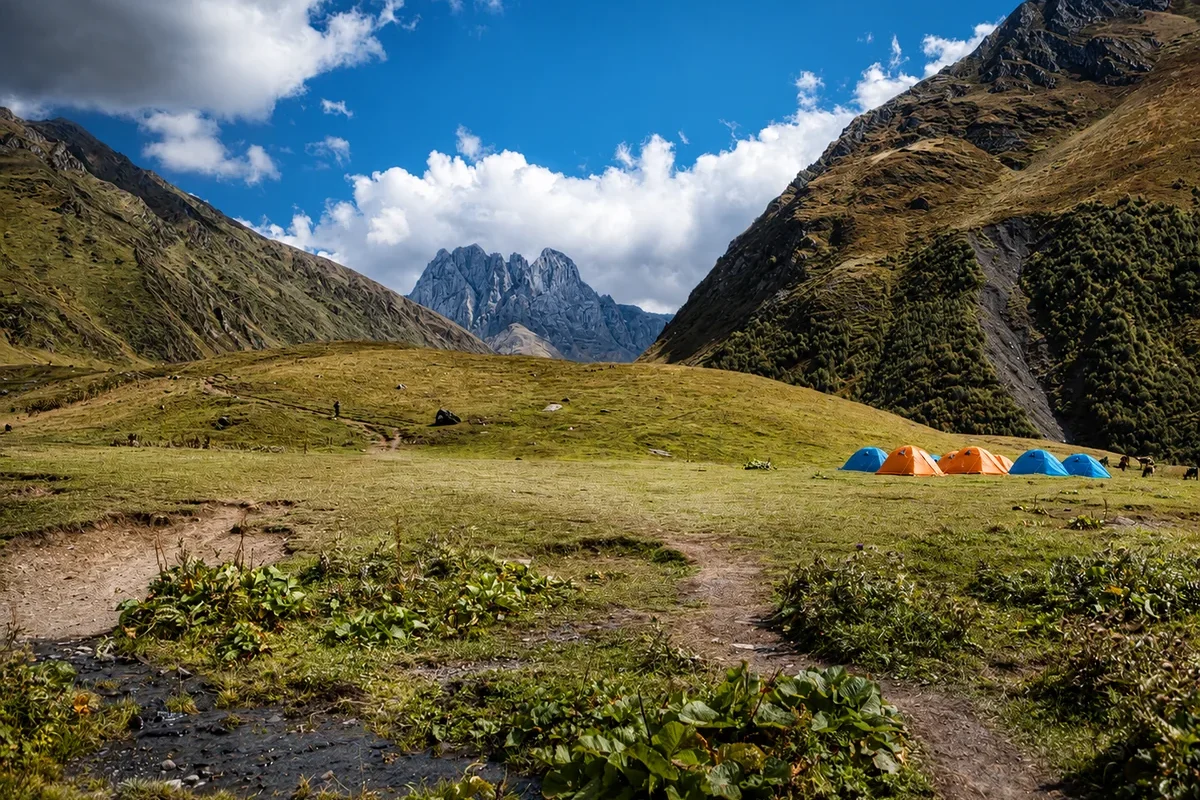
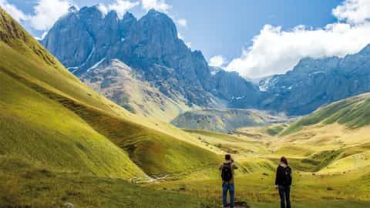
For travellers who do not plan to climb technical routes, the easiest way to experience the Chaukhi Massif is to walk from Juta towards its base.
Official tourism information describes an easy trail of around 4 kilometres, taking approximately 1.5 hours. Along the way, you also pass the small and very cold Juta Lake.
This is the right option if you want close views of the rock walls without committing to a major mountain crossing. Most of the route is open, so summer sun can feel stronger than expected. Carry water, sun protection, and a hat.
Altitude is another practical factor. Juta already sits above 2,000 metres. If you arrived directly from Tbilisi or another lower-altitude location, take the first uphill section slowly rather than treating it like a normal lowland walk.
Chaukhi Pass and the Abudelauri Lakes
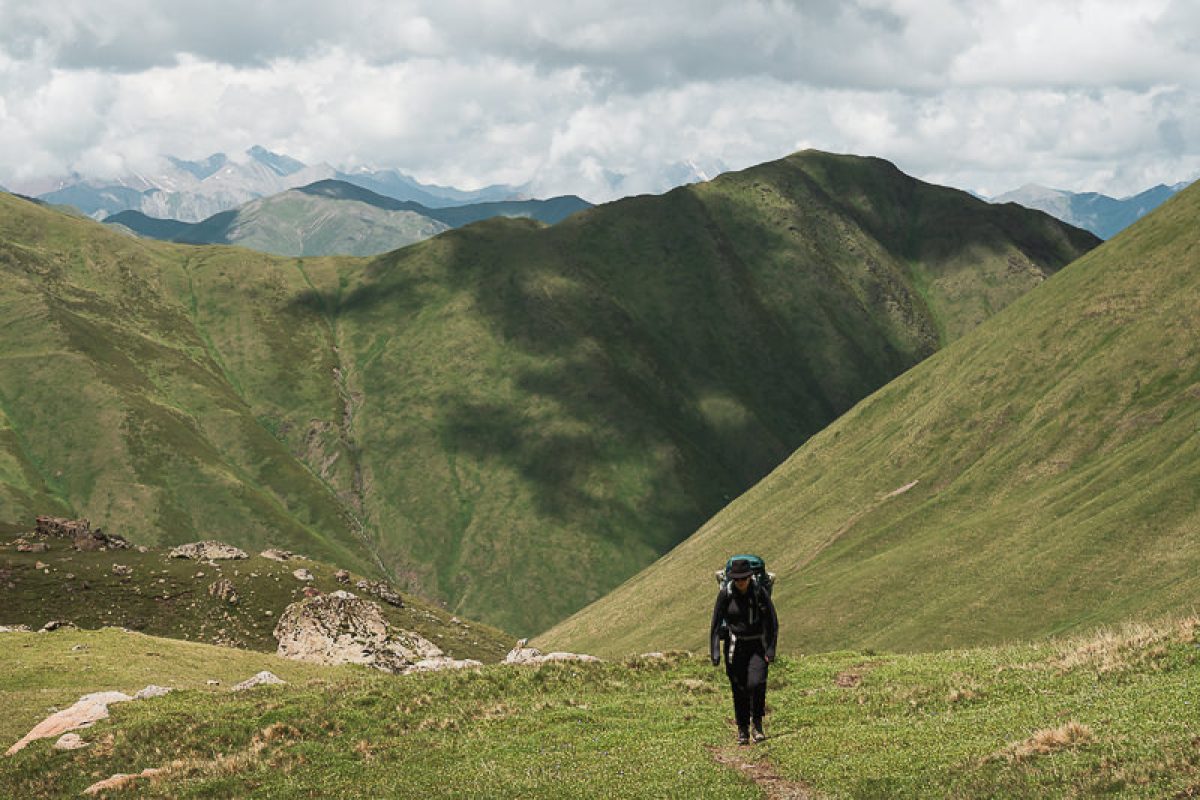
For a more demanding route, continue towards Chaukhi Pass, which sits at approximately 3,338 metres. From the pass, the landscape opens towards Khevsureti and the White, Blue, and Green Abudelauri Lakes.
The official Juta–Chaukhi–Abudelauri route gives roughly 9 kilometres and around three hours from Juta to the pass. The route includes several steeper slopes and a river crossing before reaching the high point.
This should not be confused with the easy 4-kilometre hike to the base of the massif. Reaching the pass is a much longer and more physically demanding mountain day.
Climbing the Chaukhi Peaks
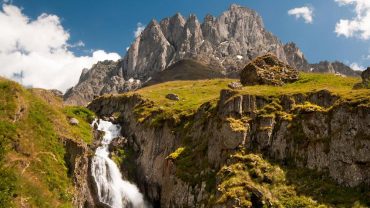
The Chaukhi Massif is also an established mountaineering area. Official information lists seven main peaks, including Asatiani at 3,842 metres, Leonidze at 3,746 metres, and Javakhishvili at 3,733 metres. Different climbing routes vary considerably in difficulty.
It is useful to separate hiking from mountaineering here. Walking from Juta to the lake or massif base does not require technical climbing ability. Attempting the peaks is a different activity entirely, and official guidance states that a professional guide is required for climbing routes.
Best Time to Visit the Chaukhi Massif
Summer is the most practical season. Official information describes summer as the best period for climbing the peaks, while June and July are specifically recommended for the Juta–Chaukhi–Abudelauri route.
Still, mountain conditions matter more than the date on the calendar. Snow can remain around high passes into early summer, and heavy rain can make river crossings more difficult. Winter hiking in the Kazbegi area is a different category and requires more experience and equipment.
The Chaukhi Massif works best when you choose the route before you leave Juta. A short hike to the base, a full crossing over Chaukhi Pass, and a technical summit climb may begin in the same valley, but they are three very different mountain experiences.



Comment (0)