
Caucasus Mountain Regions in Georgia: Complete Guide
- November 25, 2026
The Caucasus Mountains are among Georgia’s greatest natural treasures. Stretching across the country’s northern landscape, they are home to snow-covered peaks, medieval stone villages, alpine meadows, dramatic river valleys and centuries-old mountain traditions.
For travelers, however, the Georgian Caucasus is not one single destination. Each mountain region offers a different experience.
Kazbegi is ideal for a first mountain trip from Tbilisi. Svaneti combines spectacular hiking with UNESCO-listed medieval heritage. Tusheti and Khevsureti offer more remote adventures, while Racha is especially appealing for peaceful mountain landscapes and traditional village life.
Choosing the right destination depends on your available time, preferred activities, the season and how comfortable you are traveling on mountain roads.
This complete guide to the Caucasus Mountains in Georgia covers the main regions, highlights, hiking opportunities, transport options, seasonal access and practical advice for planning your trip.
Where Are the Caucasus Mountains in Georgia?
The Caucasus is a major mountain region between the Black Sea and the Caspian Sea.
It contains two principal mountain systems: the Greater Caucasus and the Lesser Caucasus.
The Greater Caucasus Mountains form much of Georgia’s northern mountainous landscape, extending from western Georgia toward the country’s northeastern border regions.
This is where you’ll find famous destinations such as Kazbegi, Svaneti, Khevsureti and Tusheti.
Georgia’s tallest mountains also rise here, including Mount Shkhara, which reaches approximately 5,203 meters, and Mount Kazbek, also known as Mkinvartsveri, at approximately 5,054 meters.
The Lesser Caucasus lies farther south, associated with mountain landscapes around Borjomi, Bakuriani, Adjara and other areas of southern and southwestern Georgia.
Both mountain systems offer beautiful scenery, but their geography, climate and travel experiences differ considerably.
For first-time visitors, understanding this distinction helps when choosing between dramatic high-alpine landscapes and gentler forested mountain resorts.
Georgia’s Mountain Regions at a Glance
Region | Main base | Best for | Suggested stay |
Kazbegi (Khevi) | Stepantsminda | First-time mountain scenery | 1–3 days |
Svaneti | Mestia | Hiking and medieval villages | 3–5 days |
Tusheti | Omalo | Remote mountain adventure | 3–5 days |
Khevsureti | Shatili or Barisakho | Fortified villages and trekking | 2–4 days |
Pshavi & Gudamakari | Regional villages | Local culture and quieter valleys | 1–3 days |
Racha | Oni or Ambrolauri | Forested mountains and village life | 2–4 days |
Western and southern mountain resorts | Gudauri, Bakuriani or Bakhmaro | Winter sports and mountain escapes | 2–4 days |
These are suggested durations, not minimum requirements. Some mountain regions require a full travel day simply to reach your accommodation.
Kazbegi: The Best Caucasus Mountain Region for First-Time Visitors
Location: Mtskheta-Mtianeti, northeastern Georgia
Main base: Stepantsminda
Best season: Late spring to autumn for general sightseeing; winter with road checks
Recommended stay: 1–3 days
Kazbegi is one of Georgia’s most recognizable mountain destinations and usually the easiest introduction to the Greater Caucasus for travelers based in Tbilisi.
The journey follows the Georgian Military Highway, passing reservoirs, historic fortresses, mountain viewpoints and dramatic valleys.
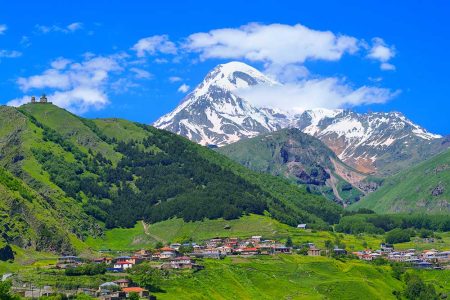
The region’s most famous landmark is Gergeti Trinity Church, a medieval church overlooking Stepantsminda with Mount Kazbek rising in the background.
Despite its popularity, Kazbegi offers considerably more than one viewpoint.
Best Places to Visit in Kazbegi
Gergeti Trinity Church: The region’s iconic landmark, offering magnificent views of the surrounding Caucasus Mountains.
Dariali Gorge: A dramatic gorge north of Stepantsminda, known for its steep cliffs and mountain scenery.
Gveleti Waterfalls: Natural attractions in the Dariali area, accessible by walking routes depending on local conditions.
Truso Valley: A remarkable landscape of mineral springs, travertine formations, abandoned villages and mountain valleys.
Juta Village: A small mountain settlement offering views of the Chaukhi Massif and opportunities for alpine hiking.
Is Kazbegi Suitable for Beginners?
Yes. Kazbegi is one of the most approachable mountain regions for travelers who want spectacular views without undertaking demanding hikes.
Many highlights can be reached by vehicle or relatively short walks, subject to current access conditions.
However, this does not mean all routes are easy. Longer hikes, glacier approaches and mountaineering objectives require substantially more preparation.
Mount Kazbek itself is a technical mountaineering destination, not a casual hiking trail.
How to Get to Kazbegi
Stepantsminda is reached from Tbilisi via the Georgian Military Highway.
Travel typically takes several hours, depending on traffic, road conditions and sightseeing stops.
Options include shared minibuses, private transfers and guided excursions.
The Gudauri–Kobi section can experience avalanche-related closures and traffic restrictions in winter and spring.
For a first visit, a day tour is practical, but an overnight stay gives you more flexibility if clouds obscure the mountain views.
Explore our group tours if you want to discover Georgia’s mountain scenery with a local guide.
Svaneti: Medieval Towers and Spectacular Mountain Hiking
Location: Northwestern Georgia
Main base: Mestia
Best season: June to September for most trekking routes, depending on snow conditions
Recommended stay: 3–5 days or longer
Svaneti is one of the most culturally distinctive and visually spectacular mountain regions in Georgia.
Its landscapes include towering peaks, glaciers, forests, alpine valleys and traditional villages surrounded by defensive stone towers.
The region is also known for its distinctive Svan cultural heritage, cuisine and local traditions.
Upper Svaneti is recognized by UNESCO for its exceptional medieval settlement landscape and traditional tower architecture.
Mestia: Gateway to Svaneti
Mestia is the principal base for most visitors.
It offers accommodation, restaurants, museums and access to several popular mountain excursions.
The town’s traditional towers provide a memorable introduction to Svan architecture, while the surrounding mountains create a striking backdrop.
Visitors can explore the Svaneti Museum of History and Ethnography, walk through nearby villages or arrange day trips to mountain viewpoints.
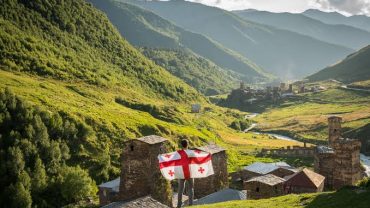
Ushguli: A UNESCO-Listed Mountain Landscape
Ushguli is a group of high-altitude villages famous for its defensive towers and traditional stone buildings.
The community is part of the UNESCO-listed Upper Svaneti cultural landscape.
Its location beneath Mount Shkhara makes it one of Georgia’s most remarkable mountain destinations.
Travelers often visit Ushguli from Mestia, but staying overnight offers more time to experience the village after day visitors leave.
The road may be rough, and seasonal restrictions can affect access.
Best Hiking Areas in Svaneti
Svaneti offers a wide range of hiking experiences.
Koruldi Lakes: Known for mountain panoramas, including views toward Ushba and the surrounding peaks.
Chalaadi Glacier area: A popular hiking destination near Mestia, although glacier conditions and safe approach distances require current local advice.
Mazeri and Becho Valley: Known for views toward Mount Ushba and access to waterfall and mountain trails.
Mestia to Ushguli: A multi-day village-to-village trekking route, commonly completed over approximately four days.
Shkhara Valley: Scenic landscapes and hiking opportunities around Ushguli, with glacier-related hazards requiring particular care.
These routes vary considerably in difficulty.
Do not assume that a short description or a route shown on a map provides enough information for safe hiking.
How to Reach Svaneti
Mestia can be reached by road from western Georgian transport hubs.
Travel from Kutaisi or Zugdidi involves a substantial journey along mountain roads.
Some domestic flight services may also be available, but schedules, weather-related cancellations and operating arrangements need to be confirmed before booking.
For most visitors, Svaneti is better suited to a multi-day itinerary than a quick day trip.
Choose Svaneti if you want a combination of dramatic landscapes, cultural heritage and serious hiking opportunities.
Source: UNESCO – Upper Svaneti.
Tusheti: Georgia’s Remote Mountain Wilderness
Location: Northeastern Georgia, administratively part of Kakheti
Main base: Omalo
Best season: Summer, subject to Abano Pass conditions
Recommended stay: 3–5 days
Tusheti is one of the most remote mountain regions in Georgia.
Located in the northeastern Greater Caucasus, it is known for medieval villages, traditional towers, alpine meadows, deep valleys and distinctive mountain customs.
For travelers seeking quiet landscapes and a sense of isolation, Tusheti can be one of the most rewarding regions in the country.
However, it also requires considerably more planning than Kazbegi or established mountain resorts.
Omalo and Keselo Towers
Omalo is the principal settlement and a common starting point for exploring Tusheti.
The historic Keselo towers rise above the surrounding village landscape and provide one of the region’s most recognizable views.
Accommodation commonly takes the form of family-run guesthouses and small local properties.
Dartlo and Traditional Tushetian Villages
Dartlo is one of Tusheti’s most picturesque villages, known for its stone architecture and traditional mountain setting.
Other settlements, such as Shenako and Diklo, offer additional opportunities to explore regional history and culture.
Some villages are remote, and access arrangements vary.
Hiking in Tusheti
Tusheti offers hiking routes through valleys, villages and highland landscapes.
The Agency of Protected Areas describes multiple marked routes with varying durations and difficulty levels.
Longer treks may connect communities across remote mountain passes.
These routes should be planned according to current trail conditions, weather forecasts, river crossings and available accommodation.
Getting to Tusheti via Abano Pass
The principal road to Tusheti crosses Abano Pass.
The route is steep, narrow and exposed in places, with road conditions affected by snow, heavy rain, landslides and maintenance work.
Georgia’s official tourism portal describes the usual access period as approximately late May to September.
These dates are indicative, not a guarantee that the road will be open.
Travelers should use an experienced local driver and an appropriately equipped vehicle.
Do not attempt the journey in an ordinary rental car or assume that having a 4WD vehicle is sufficient without mountain-driving experience.
Who Should Visit Tusheti?
Tusheti is best suited to travelers with several spare days, a flexible itinerary and an interest in remote mountain culture.
It is less suitable for visitors with tight schedules who cannot accommodate delays or changes caused by weather.
Khevsureti: Fortified Villages and Ancient Mountain Traditions
Location: Northeastern Georgia, Mtskheta-Mtianeti
Main destinations: Shatili, Mutso and Barisakho
Best season: Summer and early autumn, subject to road access
Recommended stay: 2–4 days
Khevsureti is one of Georgia’s most historically fascinating mountain regions.
Its rugged landscape contains steep gorges, fortified villages and traces of traditional highland communities.
The region is divided geographically into southern and northern sections, often referred to as Piraketa and Pirikita Khevsureti.
The road connecting these areas crosses Datvisjvari Pass.
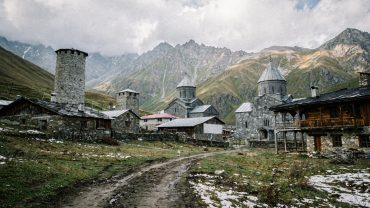
Shatili: A Medieval Fortress Village
Shatili is one of the most distinctive historic settlements in Georgia.
Its stone towers and interconnected fortified houses create an extraordinary architectural complex.
Unlike conventional villages, Shatili’s buildings were designed with defensive needs in mind.
The surrounding mountain landscape adds to its isolated atmosphere.
Mutso: An Extraordinary Historic Settlement
Mutso is another remarkable fortified settlement in Khevsureti.
Built into a steep mountainside, its defensive towers and stone buildings reflect the historical challenges of life in the region.
Access to parts of the settlement involves walking on uneven mountain paths.
Suitable footwear and careful movement are essential.
Abudelauri Lakes and Roshka
The Abudelauri Lakes are famous for their distinctive Blue, Green and White Lakes.
The surrounding landscape is dominated by the dramatic Chaukhi Massif.
Hiking routes approach the lakes from the Roshka area, while a more demanding route connects the valley with Juta across Chaukhi Pass.
The Chaukhi crossing is a serious mountain hike and should be planned with appropriate navigation, weather information and experience.
Datvisjvari Pass
Datvisjvari is a high mountain pass connecting different parts of Khevsureti.
The road offers spectacular scenery but involves significant exposure and seasonal limitations.
Driving conditions can change rapidly after rain or snowfall.
Traditional Culture in Khevsureti
Khevsureti is renowned for its distinctive highland traditions, historical defensive architecture and ceremonial heritage.
Some communities preserve local customs associated with shrines, seasonal celebrations and traditional clothing.
Visitors should respect religious and cultural restrictions, particularly around sacred spaces.
Choose Khevsureti if you’re interested in medieval mountain architecture, remote villages and challenging highland landscapes.
Pshavi and Gudamakari: Quieter Mountain Valleys Near Tbilisi
Location: Mtskheta-Mtianeti
Best for: Traditional culture, river valleys and less crowded scenery
Best season: Late spring to autumn
Recommended stay: 1–3 days
Pshavi and Gudamakari are historical mountain areas that offer a different experience from Georgia’s best-known alpine destinations.
They are associated with the valleys of the Aragvi river system and traditional mountain communities.
These regions are especially interesting for travelers who want to explore rural landscapes and local culture without focusing exclusively on famous tourist landmarks.
Pshavi
Pshavi is known for mountain villages, traditional food and its cultural connections with the wider Pshav-Khevsureti region.
The area is associated with the famous Georgian poet Vazha-Pshavela, whose literary work drew heavily on highland life and traditions.
The region is also known for dambalkhacho, a traditional Georgian cheese whose preparation method is recognized as intangible cultural heritage.
Gudamakari
Gudamakari offers forested slopes, mountain villages and quieter valleys.
It can appeal to travelers interested in local history, village life and natural landscapes.
Tourist infrastructure is more limited than in Kazbegi or Mestia.
Before visiting remote settlements, confirm accommodation availability, road access and local transportation arrangements.
Why Visit These Areas?
Pshavi and Gudamakari offer an opportunity to experience Georgian mountain culture without concentrating solely on the country’s most photographed destinations.
They are particularly suitable for travelers interested in regional traditions and slower journeys.
For additional lesser-known destinations, explore our Hidden Gems in Georgia guide.
Racha: Forested Mountains, Traditional Villages and Scenic Roads
Location: Northwestern Georgia
Main bases: Oni and Ambrolauri
Best season: Late spring to autumn
Recommended stay: 2–4 days
Racha offers a distinctive alternative to Georgia’s more dramatic high-alpine tourism centers.
Its landscape combines forested mountains, rivers, scenic valleys, traditional villages and historical monuments.
The region is particularly attractive for travelers who prefer a quieter itinerary.
Ambrolauri and Lower Racha
Ambrolauri is a useful starting point for exploring the wider region.
Nearby attractions include Shaori Reservoir, Nikortsminda Cathedral and rural landscapes.
The area is also associated with the well-known Georgian wine Khvanchkara.
Oni and Upper Racha
Oni is a regional town with distinctive cultural heritage, including a historic synagogue and several surrounding religious sites.
It can serve as a base for visiting villages and exploring the mountain landscapes of Upper Racha.
Ghebi and Remote Mountain Villages
Ghebi is a highland village known for its traditional setting and surrounding mountain scenery.
It offers a more remote experience than the larger settlements of the region.
Hiking routes in the wider area vary in difficulty, and some require substantial experience.
Important Safety Considerations in Racha
Parts of Racha have experienced serious natural hazards, including the devastating landslide in Shovi in August 2023.
This makes it particularly important to check current restrictions and environmental conditions before visiting mountain valleys or former resort areas.
Do not assume that historical hiking descriptions, accommodation listings or photographs accurately reflect present conditions.
For remote routes, confirm safety and access with local authorities and qualified guides.
Choose Racha for a slower mountain journey featuring forests, regional cuisine, traditional villages and scenic landscapes.
Gudauri, Bakuriani and the Mountains of Southern Georgia
Not all of Georgia’s mountain destinations belong to the Greater Caucasus.
Several popular highland resorts and forested mountain landscapes lie farther south, within the Lesser Caucasus and associated mountain systems.
Understanding this distinction is useful if you’re planning a winter sports trip or prefer more developed mountain resorts.
Gudauri: Greater Caucasus Ski Resort
Gudauri lies in the Greater Caucasus along the Georgian Military Highway.
It is known for skiing, snowboarding and panoramic mountain scenery.
The resort is also a popular stop on the journey to Kazbegi.
Winter operations depend on snow conditions, weather and lift availability.
Bakuriani: Forested Mountain Resort
Bakuriani is located in the mountains of southern Georgia.
It is a popular winter sports destination, particularly for families and travelers seeking a resort atmosphere.
During summer, the surrounding forests and mountain landscapes provide opportunities for walking and outdoor recreation.
Bakhmaro: Mountain Landscapes Above Guria
Bakhmaro is a highland resort in western Georgia known for its forested mountain scenery.
Its distinctive landscapes and seasonal pastoral traditions make it appealing for summer visits.
The surrounding mountain roads and settlements may require specialized transportation depending on conditions.
Goderdzi and Mountainous Adjara
The Goderdzi area offers a different perspective on Georgia’s mountains, combining highland scenery with the humid landscapes of southwestern Georgia.
It is associated with winter sports and mountain recreation, although access and operating conditions vary by season.
These regions are good alternatives for travelers seeking mountain scenery without necessarily visiting the remote villages of the northern Greater Caucasus.
Best Caucasus Mountain Regions in Georgia for Hiking
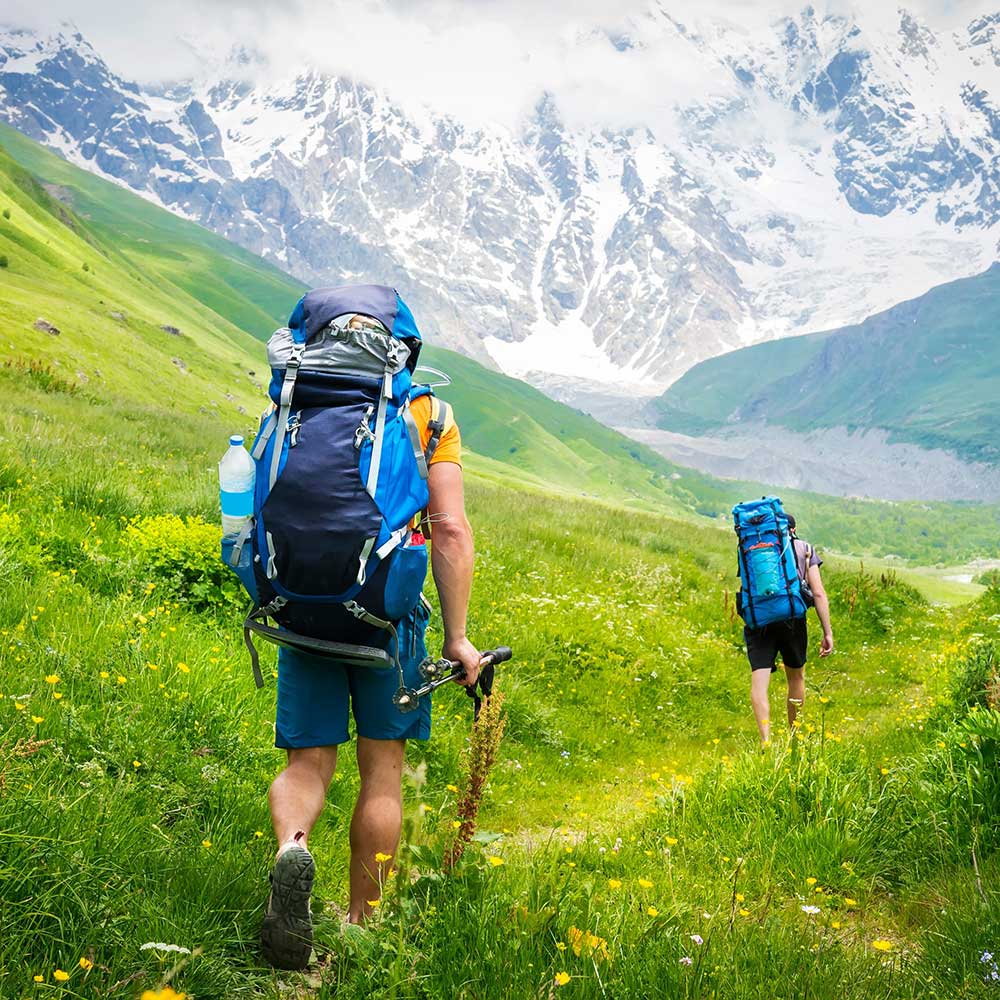
Georgia offers hiking opportunities ranging from short scenic walks to technical high-altitude expeditions.
The best region depends on your experience, available time and the type of terrain you prefer.
For Beginners
Kazbegi is one of the best starting points.
Shorter walks around Stepantsminda and established viewpoints allow visitors to experience dramatic scenery without committing to multi-day trekking.
Selected trails around Mestia also provide relatively accessible options, although weather and terrain still need to be assessed.
For Intermediate Hikers
Svaneti offers several rewarding day hikes and multi-day routes.
The Abudelauri Lakes approach from Roshka, selected Khevsureti trails and some routes around Juta may also appeal to hikers with appropriate experience.
Difficulty depends on distance, elevation gain, weather and route conditions, not only the destination’s name.
For Experienced Trekkers
Long-distance hiking in Tusheti, remote sections of Khevsureti and higher alpine routes in Svaneti require more extensive planning.
Potential challenges include:
- Difficult terrain.
- River crossings.
- Rapidly changing weather.
- Limited mobile reception.
- Long distances between settlements.
- Navigation difficulties.
- Snowfields and exposed passes.
Glacier travel, technical mountaineering and summit ascents require specialized skills and equipment.
Do not attempt technical mountain routes solely because they appear in a general travel guide.
Best Time to Visit the Caucasus Mountains in Georgia
Spring: March to May
Spring brings increasingly green valleys and improving conditions in lower-elevation destinations.
Kazbegi and selected foothill areas may be suitable for sightseeing, depending on road and weather conditions.
However, many high mountain trails can remain snow-covered.
Remote passes such as Abano and Datvisjvari should not be assumed accessible.
Summer: June to August
Summer is generally the most practical season for visiting Georgia’s remote mountain regions.
Svaneti, Tusheti and Khevsureti become more accessible as seasonal roads open.
This is also the main period for many alpine hiking routes.
Nevertheless, thunderstorms, heavy rain, landslides and sudden weather changes remain possible.
Autumn: September to November
Early autumn can be excellent for mountain photography, hiking and enjoying quieter villages.
Racha is especially attractive when the forests change color.
September can also provide good conditions in Svaneti and Kazbegi.
However, conditions deteriorate as winter approaches, and remote roads may close earlier than expected.
Winter: December to February
Winter is best suited to established mountain resorts and accessible sightseeing destinations.
Gudauri and Bakuriani are popular choices for skiing and snowboarding.
Travel to remote settlements in Tusheti, Khevsureti and some parts of Svaneti can be heavily restricted.
How to Reach Georgia’s Caucasus Mountain Regions
Transportation is one of the most important considerations when planning a mountain holiday.
Kazbegi
Kazbegi is commonly reached from Tbilisi along the Georgian Military Highway.
Shared minibuses, guided tours and private transfers are available depending on the route and season.
Svaneti
Mestia is reached mainly through western Georgia.
Travelers commonly approach via Zugdidi or Kutaisi before continuing into the mountains.
Long-distance road travel is required, and mountain conditions can affect schedules.
Tusheti
The principal road crosses Abano Pass.
Travel generally requires an experienced driver and an appropriately equipped 4WD vehicle.
The road is seasonal and is not suitable for ordinary self-drive tourism without specialized experience.
Khevsureti
Shatili is accessed via a mountain route crossing Datvisjvari Pass.
The northern section of the region becomes difficult or inaccessible by road during winter conditions.
Racha
Oni and Ambrolauri can be reached by regional roads from central and western Georgia.
More remote villages may require additional arrangements and suitable vehicles.
Do You Need a 4WD Vehicle?
Not for every mountain destination.
Major settlements such as Stepantsminda and Mestia can often be reached by ordinary vehicles when roads are open and conditions are suitable.
However, remote routes into Tusheti, northern Khevsureti and selected highland villages can require specialized transportation.
Vehicle suitability should always be determined by current road conditions rather than general assumptions.
For detailed transportation options, see our Getting Around Georgia guide.
Where to Stay in Georgia’s Mountain Regions
Accommodation ranges from established mountain hotels to small family-run guesthouses.
Kazbegi
Stepantsminda offers a variety of hotels, guesthouses and mountain-view accommodation.
It is one of the most convenient areas for first-time mountain visitors.
Svaneti
Mestia has a developed selection of guesthouses and hotels.
More remote villages such as Ushguli offer simpler accommodation with varying facilities.
Tusheti
Accommodation is primarily provided by local guesthouses and small seasonal properties.
Book ahead and confirm meals, electricity and bathroom facilities where relevant.
Khevsureti
Accommodation is more limited, particularly in remote northern villages.
Some guesthouses operate seasonally.
Racha
Travelers can find accommodation in towns such as Oni and Ambrolauri, as well as selected rural properties.
Advance booking is sensible in smaller settlements.
Where possible, staying with local hosts provides an opportunity to experience regional cuisine and support mountain communities.
What to Pack for a Caucasus Mountain Trip
Clothing requirements depend on season, altitude and activities.
Even during summer, mountain evenings can be cold.
For a typical sightseeing trip, pack:
- Comfortable walking shoes.
- Warm fleece or sweater.
- Waterproof and windproof jacket.
- Long trousers.
- Sun protection.
- Reusable water bottle.
- Portable power bank.
- Offline maps.
- Personal medication.
- Appropriate travel insurance information.
For hiking, additional equipment may include proper hiking boots, navigation tools, a first-aid kit, a headlamp and suitable emergency supplies.
Remote trekking requires more comprehensive equipment and route-specific planning.
For a complete seasonal checklist, read our Georgia Packing List before departure.
Mountain Culture, Food and Local Traditions
Georgia’s mountain regions are culturally diverse.
Traditional architecture, local foods, festivals and customs differ between Svaneti, Khevsureti, Tusheti, Racha and other highland communities.
Food Traditions
In Svaneti, traditional specialties include kubdari, a savory meat-filled bread, and dishes such as tashmijabi.
In the eastern mountains, khinkali and regional cheese traditions are particularly important.
Racha is known for lobiani, local ham and distinctive regional wines.
Religious and Community Traditions
Some mountain communities maintain festivals, sacred places and historical rituals connected to local identity.
Visitors should respect posted restrictions and local instructions.
Not every sacred place is open to all visitors, and photography may be restricted during ceremonies.
Responsible Mountain Tourism
Support local accommodation providers, guides and small businesses where possible.
Avoid littering, damaging historical structures or entering private property without permission.
Use marked trails and follow protected-area regulations.
For seasonal celebrations and local cultural events, explore our Georgia Festivals & Events 2027 guide.
Sample Caucasus Mountain Itineraries
2 Days: Kazbegi from Tbilisi
Day 1: Travel along the Georgian Military Highway, stopping at Ananuri and Gudauri before reaching Stepantsminda.
Day 2: Visit Gergeti Trinity Church, enjoy local viewpoints and return to Tbilisi.
This is an excellent introduction to Georgia’s mountain landscapes.
4 Days: Svaneti Highlights
Day 1: Travel to Mestia and explore the town.
Day 2: Enjoy a suitable day hike or mountain viewpoint.
Day 3: Visit Ushguli, subject to road conditions.
Day 4: Return to western Georgia.
Allow additional days if you want to complete the multi-day Mestia–Ushguli trek.
4–5 Days: Tusheti Adventure
Day 1: Travel to Omalo via Abano Pass, subject to safe road access.
Day 2: Explore Omalo and nearby villages.
Day 3: Visit Dartlo or another accessible village.
Day 4: Enjoy an appropriate hiking or cultural experience.
Day 5: Return via Abano Pass, leaving flexibility for possible delays.
This itinerary is suitable only when seasonal access and accommodation have been confirmed.
3 Days: Racha Mountains and Villages
Day 1: Explore Ambrolauri, Shaori Reservoir and Nikortsminda.
Day 2: Continue toward Oni and discover local cultural sites.
Day 3: Explore an accessible mountain village or scenic route before departure.
This is a good option for travelers seeking a slower regional journey.
For a full-country itinerary combining the mountains with Tbilisi, wine regions and the Black Sea coast, read our Georgia Itinerary: 3, 5, 7, 10 & 14 Days guide.
Essential Safety Tips for Mountain Travel in Georgia
Traveling in Georgia’s mountains can be deeply rewarding, but conditions should never be underestimated.
Check current road restrictions. Mountain passes and major highways can close temporarily because of snow, avalanches or landslides.
Allow flexibility. Avoid planning a tight flight connection immediately after returning from a remote mountain region.
Check weather by altitude. Conditions in a valley can differ substantially from those on nearby passes.
Use qualified guides for technical routes. Glacier travel, exposed ridges and demanding mountaineering routes require specialist skills.
Respect border areas. Some valleys and trails lie near international borders where access restrictions may apply.
Carry offline navigation. Mobile coverage is unreliable in some remote areas.
Confirm accommodation. Seasonal guesthouses may close outside the main visitor period.
Review insurance coverage. Check altitude limits, trekking exclusions, winter sports coverage and emergency evacuation conditions.
Avoid unsafe structures. Do not enter unstable towers, abandoned buildings or restricted historical sites.
Georgia’s emergency number is 112.
For planning additional mountain and nature experiences, see our Hidden Gems in Georgia guide.
Frequently Asked Questions
Kazbegi is generally the best starting point. It is accessible from Tbilisi and offers dramatic mountain views, historic landmarks and sightseeing options that do not require advanced hiking skills.
June to September is generally the most practical period for remote mountain travel and high-altitude hiking. May and October can also be suitable for selected destinations, but snow and weather conditions may restrict access. Winter is best for established ski resorts.
Svaneti offers a wider variety of established multi-day trekking routes and mountain villages. Kazbegi is more convenient for shorter visits from Tbilisi and offers scenic day hikes and mountain viewpoints. Both regions also contain advanced routes that require specialist preparation.
Some areas can be reached using alternative transport arrangements, but the principal mountain road into Tusheti and the route toward northern Khevsureti are demanding and seasonal. Using an experienced local driver with a suitable vehicle is generally the safer choice.
The Caucasus Mountains are among the most extraordinary reasons to visit Georgia.
Kazbegi provides an accessible introduction to dramatic mountain scenery. Svaneti combines world-class landscapes with distinctive medieval heritage. Tusheti and Khevsureti reward travelers seeking more remote cultural and outdoor experiences, while Racha offers peaceful mountain valleys and traditional village life.
The best region depends on the kind of trip you want to experience.
If you have only one or two days, start with Kazbegi. If you enjoy hiking and have several days available, consider Svaneti. For remote mountain exploration, plan Tusheti or Khevsureti carefully during the appropriate season.
For a broader journey, combine Georgia's mountain regions with historical cities, wineries and the Black Sea coast.
Discover Georgia with Gamarjoba Georgia Tours through our group tours, private tours and private transfer services.

Comment (0)