Ananuri Fortress stands directly on the Georgian Military Highway and is one of the easiest major historical complexes to reach north of Tbilisi. Ananuri village is around 60 kilometres from the capital, and Georgia’s official tourism portal estimates a driving time of approximately one hour and 25 minutes from Tbilisi.
You do not need a mountain hike, a four-wheel-drive vehicle or complicated logistics to reach the site.
That convenience also creates a problem.
Many travellers stop for fifteen minutes, take a photograph of the fortress against the reservoir and immediately continue towards Gudauri.
They see the location but barely look at the actual complex.
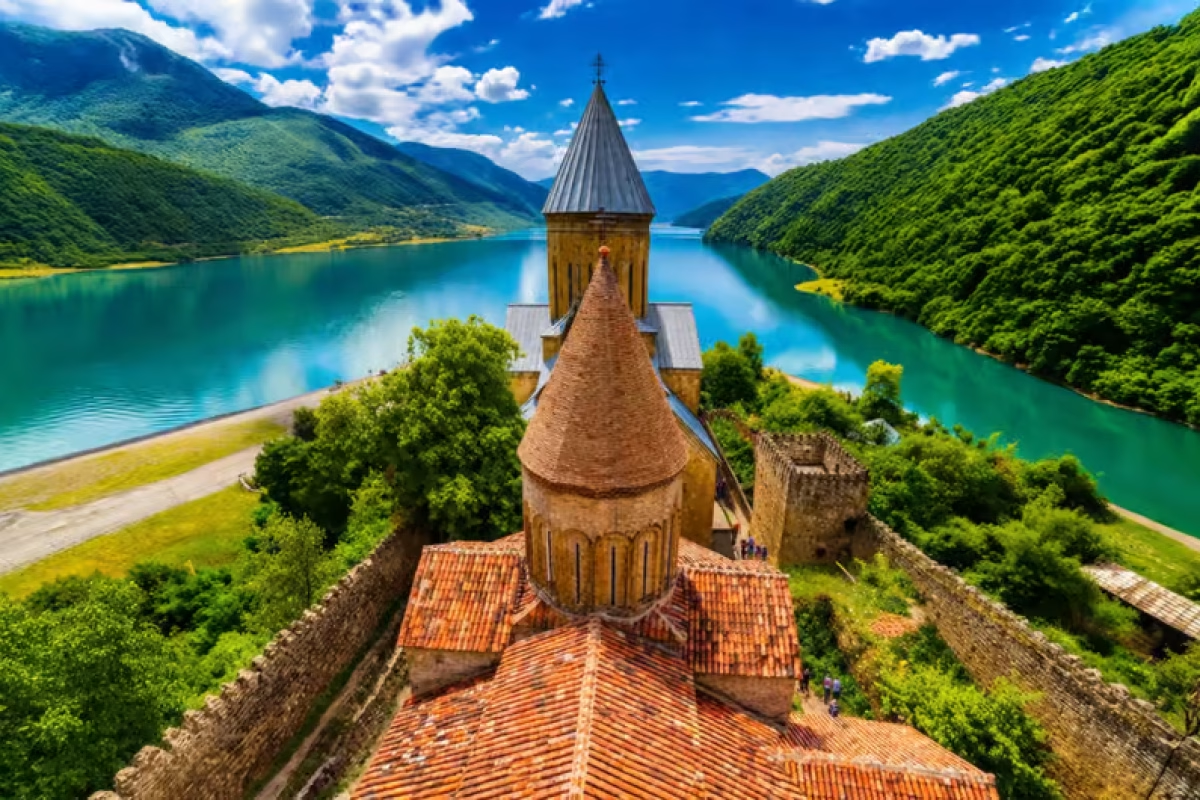
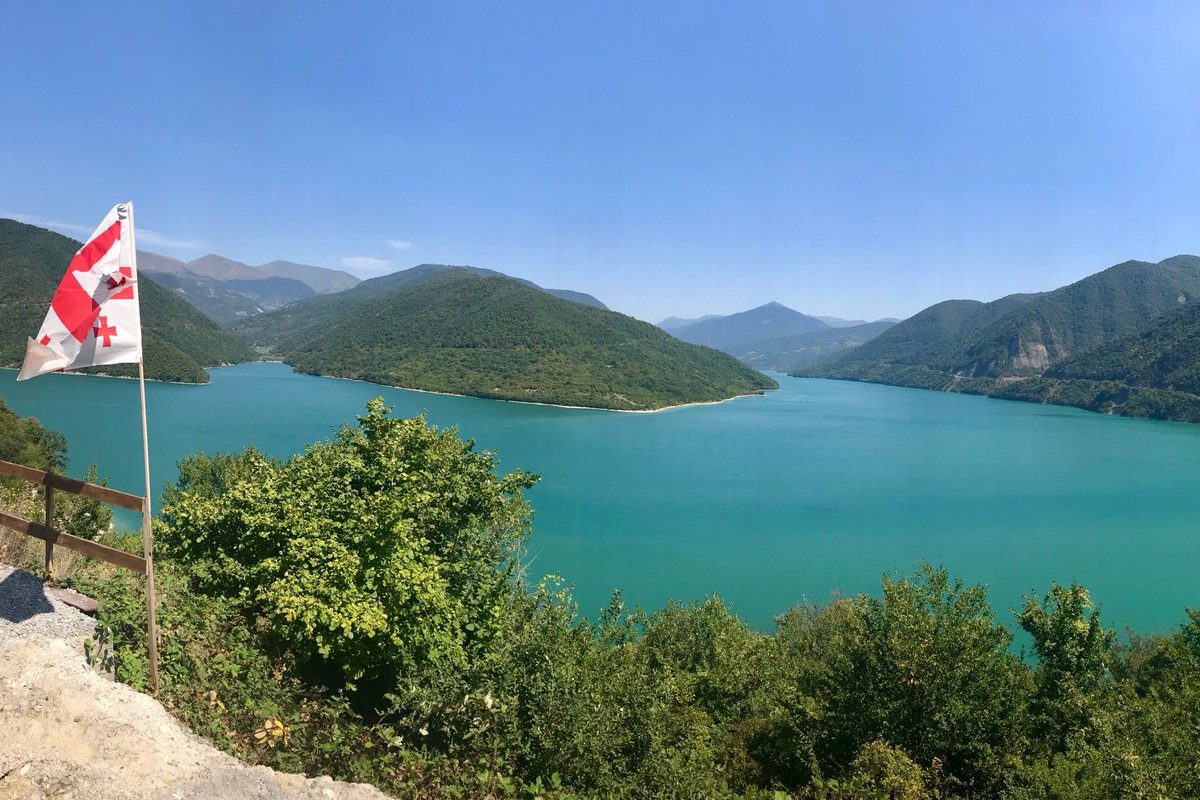
Ananuri Fortress is located in the Mtskheta-Mtianeti region, in the municipality of Dusheti. Ananuri village stands on the right bank of the Aragvi River and the Georgian Military Highway passes directly through the area. The fortress also overlooks the Zhinvali Reservoir.
Driving from Tbilisi is relatively straightforward, but Ananuri works particularly well as part of a northbound itinerary.
Many Kazbegi group tours combine Zhinvali, Ananuri, Gudauri and Stepantsminda on the same route. Travellers who prefer to control the amount of time spent at each stop may find private Kazbegi tours more practical.
Ananuri is not a single castle building.
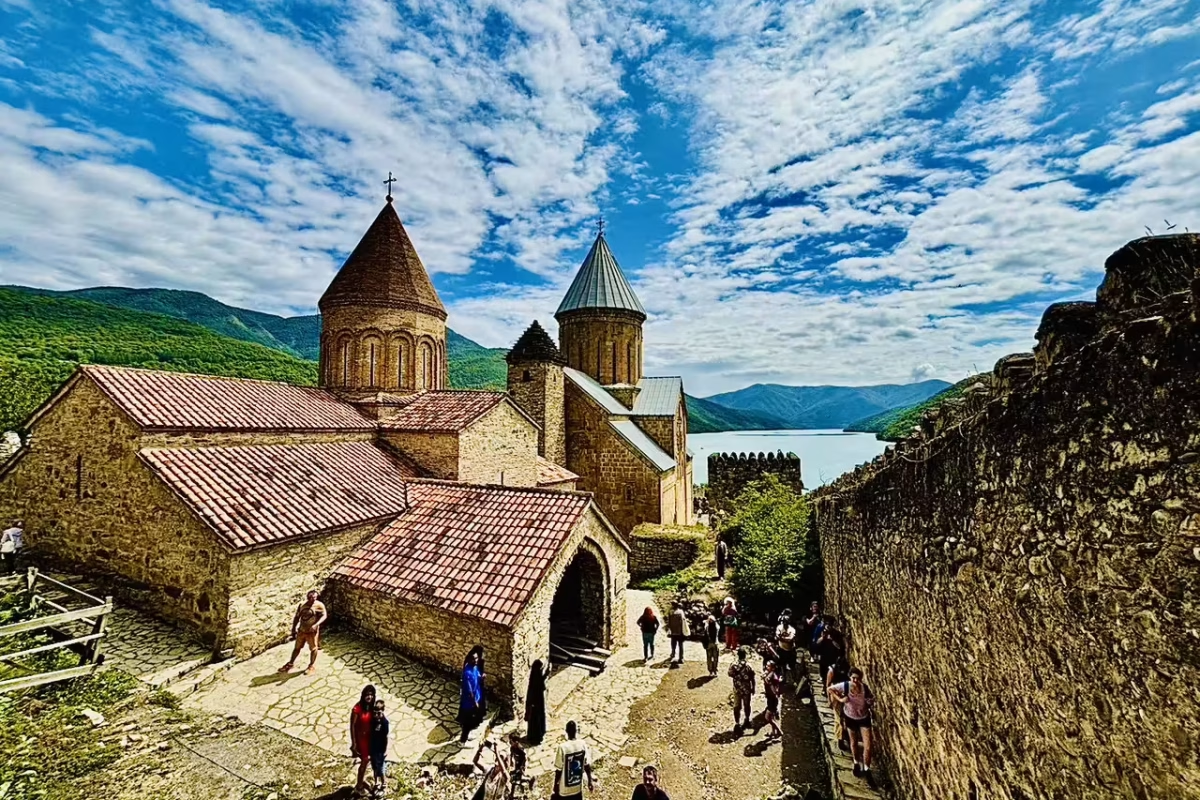
The fortified ensemble combines military, religious and secular structures. According to Georgia’s official tourism portal, surviving elements of the complex date from the 14th to the 18th centuries. They include upper and lower fortresses, defensive walls, towers, three churches, a bell tower, an octagonal cell and a water reservoir.
This is worth remembering before you enter.
From the road, Ananuri Fortress can look like one compact stone castle. Inside, the layout makes much more sense when you recognise that different buildings had different functions and were enclosed within a defensive system.
The fortress was connected with the feudal rulers of the Aragvi area and the control of strategically important roads. Official Georgia Travel information also notes that King Erekle II regarded Ananuri as one of the country’s seven strongest fortresses and took refuge there after his defeat at the Battle of Krtsanisi.
Do not walk directly to the largest church and ignore everything else.
First, spend a few minutes looking at the position of the walls and towers. The relationship between defensive and religious architecture is one of the most useful details for understanding the site.
The complex contains three churches. Georgia Travel’s official description also identifies the Sheupovari Tower and structures associated with the names Ghvtaeba and Mkurnali.
Look closely at the carved stone decoration on the church exterior.
These details are easy to miss when visitors remain several metres away taking wide-angle photographs. Moving around the facade and viewing the stonework from different angles often reveals more relief and depth.
Wear sensible shoes as well. Stone steps and surfaces inside historic fortifications are not consistently level, and wet stone can become slippery.
Twenty minutes is enough to enter the courtyard, take photographs and leave.
For a proper visit to Ananuri Fortress, allow approximately 45 minutes to one hour.
That gives you time to understand the layout, enter the churches where access is available and stop for the reservoir view without constantly checking the car park.
Official tourism information also mentions picnic tables and boat rental on the Zhinvali Reservoir shore. Because such services can be seasonal or operationally variable, it is sensible to confirm availability locally.
Ananuri Fortress can be included in itineraries during different seasons, but the surrounding landscape changes considerably.
Georgia Travel particularly highlights autumn, when the forest around the fortress changes colour. The official tourism site also notes the reservoir view from Ananuri throughout the year.
During summer, I recommend arriving earlier in the day.
Ananuri lies on one of Georgia’s busiest tourist routes towards Kazbegi. Tour groups commonly stop here, so the interior can feel noticeably busier during the active part of the day.
Earlier arrival also makes it easier to move around the complex and examine architectural details rather than waiting for large groups to pass through narrow areas.

Yes, but not simply because it is convenient.
Ananuri Fortress is useful for understanding how defence, religious architecture and control of a strategic road could exist within one fortified space in medieval and early modern Georgia.
If you are already travelling to Gudauri or Kazbegi, skipping Ananuri makes little practical sense. It lies directly on the route and does not require an entire day.
The fortress also fits naturally into multi-day tours in Georgia that follow the Georgian Military Highway north from Tbilisi.
One final tip: take the classic photograph with the reservoir behind the fortress, but do not treat that viewpoint as the entire visit. The more interesting historical information is inside the walls, where buildings from different periods stand within the same defensive ensemble.