What to See in Uplistsikhe
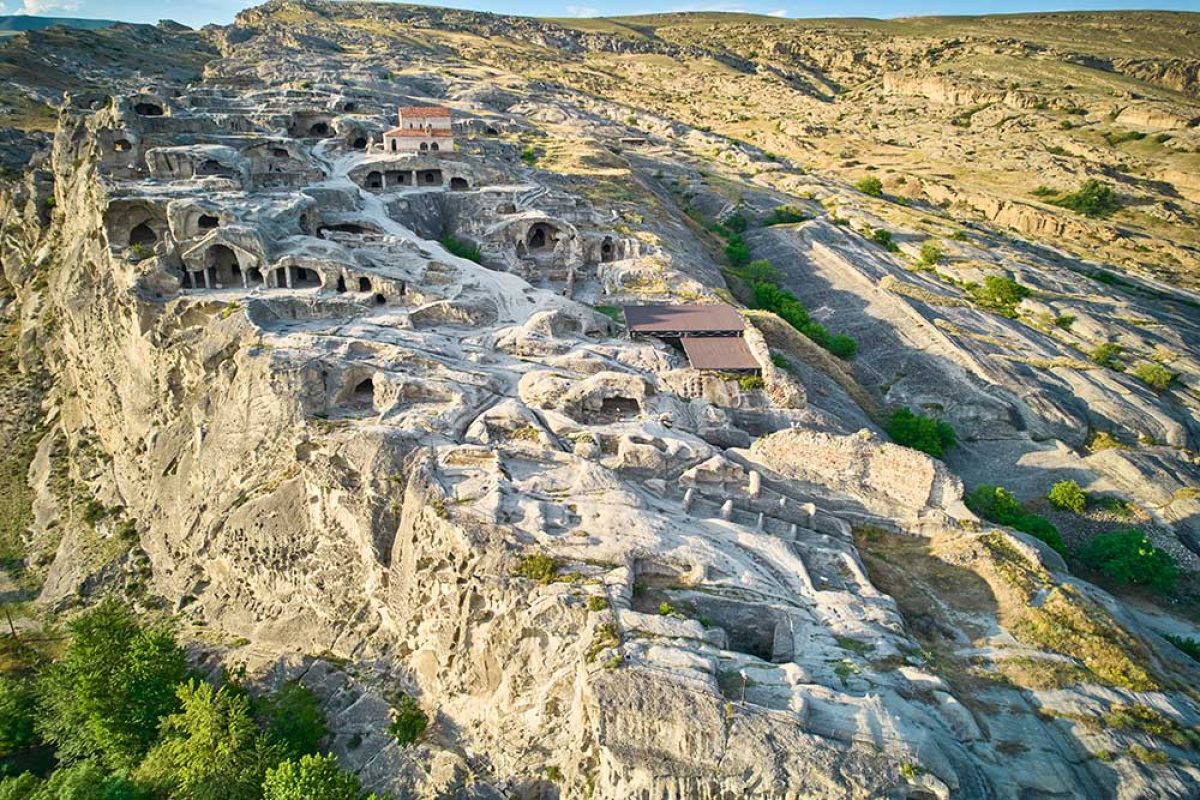
Uplistsikhe was cut into a sandstone massif. As you move uphill, you pass open rock surfaces, carved passages, and chambers of very different sizes. Archaeological research has helped interpret many of these spaces, but the exact purpose of every individual room is not known with equal certainty.
This is one reason the site can be difficult to understand without a guide or some historical context. At first, several rock-cut chambers may look similar. Once you understand that the settlement served religious, political, and urban functions during different periods, the large halls, channels, and carved routes become easier to read.
UNESCO’s description of Uplistsikhe also emphasizes the site’s development across several historical periods rather than presenting it as a settlement created at one single moment.
A Christian church stands on the upper section of the complex. It belongs to a much later historical phase than the oldest rock-cut structures. The contrast is useful because it makes the long chronology of the site physically visible.
What Shoes Should You Wear at Uplistsikhe?
This is one of the practical details visitors often underestimate. Much of Uplistsikhe consists of exposed, sloping rock. The stone can feel surprisingly smooth underfoot and may become slippery after rain.
Shoes with a flat sole and decent grip are far more practical than smooth-soled footwear or loose sandals. Expect inclines, carved steps, and uneven surfaces. This is not the same as walking around a paved historical centre.
Summer brings a different problem. Large sections of the archaeological site are exposed to direct sun, with limited natural shade. The pale rock reflects heat, and a midday visit can feel harsher than the air temperature alone suggests.
Carry water, use sun protection, and bring a hat during the warmer months.