Uplistsikhe: History and Practical Travel Guide

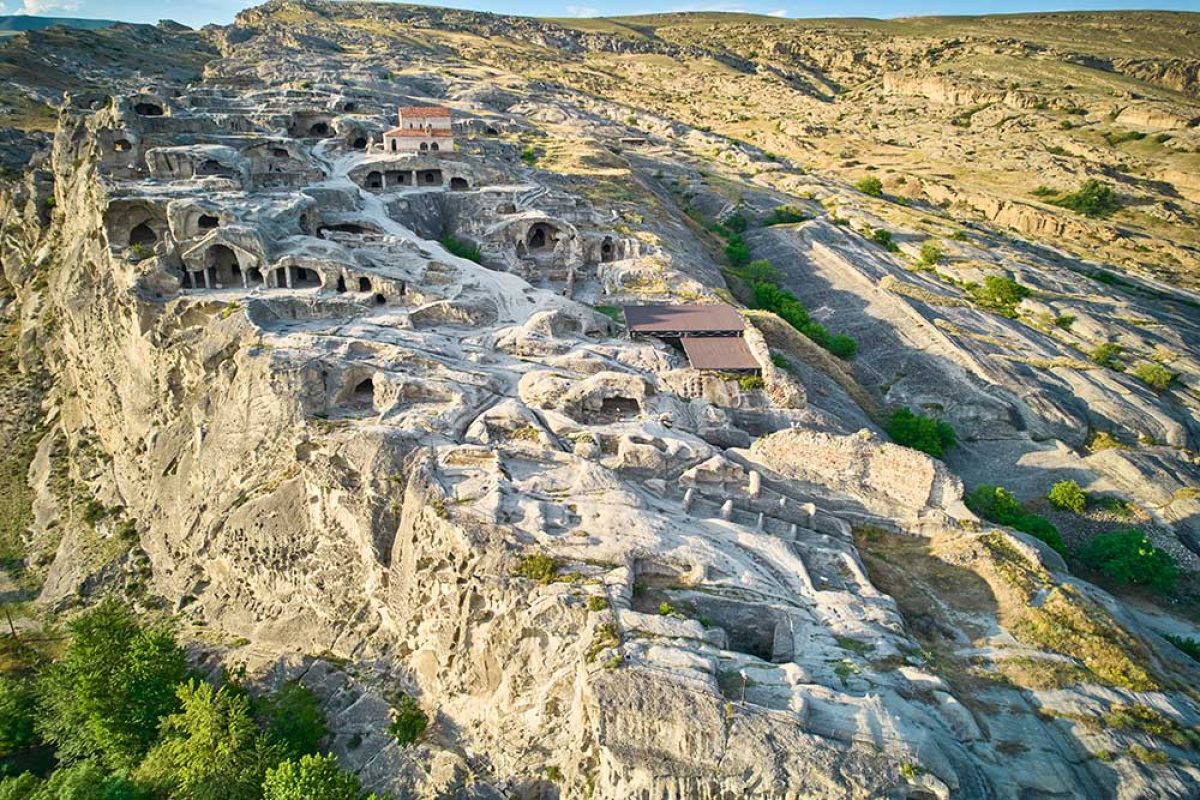
Uplistsikhe is an ancient rock-hewn town in Georgia’s Shida Kartli region, built into a rocky massif above the left bank of the Mtkvari River near Gori. It is easy to include on a day trip from Tbilisi, but once you start walking through the site, it becomes clear that this is more than a collection of caves.

The rock preserves traces of streets, halls, religious spaces, and structures created for different purposes over a very long period of settlement.

According to Georgia’s official tourism platform, the history of Uplistsikhe begins in the Late Bronze Age, and the site is considered one of the oldest inhabited locations in the Caucasus. UNESCO’s Tentative List describes it as an important religious, political, and cultural centre during the Hellenistic and Late Antique periods. The town experienced another period of prosperity between the 9th and 11th centuries before being ravaged by Mongol invasions in the 13th century.

Uplistsikhe

What to See in Uplistsikhe

Uplistsikhe was cut into a sandstone massif. As you move uphill, you pass open rock surfaces, carved passages, and chambers of very different sizes. Archaeological research has helped interpret many of these spaces, but the exact purpose of every individual room is not known with equal certainty.

This is one reason the site can be difficult to understand without a guide or some historical context. At first, several rock-cut chambers may look similar. Once you understand that the settlement served religious, political, and urban functions during different periods, the large halls, channels, and carved routes become easier to read.

UNESCO’s description of Uplistsikhe also emphasizes the site’s development across several historical periods rather than presenting it as a settlement created at one single moment.

A Christian church stands on the upper section of the complex. It belongs to a much later historical phase than the oldest rock-cut structures. The contrast is useful because it makes the long chronology of the site physically visible.

What Shoes Should You Wear at Uplistsikhe?

This is one of the practical details visitors often underestimate. Much of Uplistsikhe consists of exposed, sloping rock. The stone can feel surprisingly smooth underfoot and may become slippery after rain.

Shoes with a flat sole and decent grip are far more practical than smooth-soled footwear or loose sandals. Expect inclines, carved steps, and uneven surfaces. This is not the same as walking around a paved historical centre.

Summer brings a different problem. Large sections of the archaeological site are exposed to direct sun, with limited natural shade. The pale rock reflects heat, and a midday visit can feel harsher than the air temperature alone suggests.

Carry water, use sun protection, and bring a hat during the warmer months.

Uplistsikhe

How to Get to Uplistsikhe

  • Uplistsikhe is approximately 10 kilometres from Gori. Georgia’s official tourism platform gives an estimated road journey of around 1 hour and 50 minutes from Tbilisi.
  • Many travellers combine the site with Gori or other locations in Shida Kartli. Reaching Uplistsikhe by private car or organized tour from Tbilisi is straightforward. When using public transport, plan the final section from Gori to the archaeological site separately rather than assuming that intercity transport will take you directly to the entrance.
  • The official Georgian Heritage Sites tariff page currently lists the adult admission fee for the Uplistsikhe Museum-Reserve as 15 GEL. Prices and visitor conditions can change, so check the official information before travelling.

How Much Time Do You Need at Uplistsikhe?

  • Allow at least 1.5 to 2 hours for Uplistsikhe. It is possible to follow the main route quickly, but rushing through the complex makes the structure of the ancient town much harder to understand.
  • In summer, morning or later afternoon visits are more comfortable because you avoid part of the strongest midday sun. On windy days, the exposed upper rock can also feel noticeably windier than the entrance and parking area.
  • The most common mistake is to visit Uplistsikhe expecting to see a series of impressive caves. A better approach is to read it as a town. Look for routes between spaces, changes in elevation, large communal areas, and the way different parts of the settlement connect.
  • Once you start looking at Uplistsikhe this way, the rock stops feeling like a random collection of chambers and begins to show the shape of an ancient urban landscape.