Zhinvali Reservoir Georgia: Complete Travel Guide

Zhinvali Reservoir is located in the Mtskheta-Mtianeti region, in Dusheti Municipality. Almost every traveller heading north towards Kazbegi on the Georgian Military Highway sees the water, but many only look at it through a car window or stop at the first roadside viewpoint. Georgia’s official tourism portal places the reservoir north of the town of Zhinvali and includes it on northbound routes with Ananuri and Stepantsminda.

The first thing to understand is that this is not a natural mountain lake.

The modern Zhinvali Reservoir is connected with the Zhinvali hydrocomplex. According to Georgia Travel, the hydrocomplex was built in 1985, and historical areas were submerged as the reservoir was created. 

That background matters because the water you see today covers a landscape that looked very different before the hydroelectric project.

Ananuri Fortress

Where Is Zhinvali Reservoir?

The reservoir lies north of Tbilisi in Dusheti Municipality. Official Georgian tourism information identifies it as part of the Mtskheta-Mtianeti region. Travellers using the Georgian Military Highway encounter views of the reservoir before continuing towards Ananuri, Gudauri and Kazbegi.
One practical point: do not plan your visit around a single Google Maps pin.
Zhinvali Reservoir is not a compact lakefront attraction with one entrance, one parking area and one official viewing platform. The road follows sections of the surrounding terrain, and the shape of the water changes as you move.

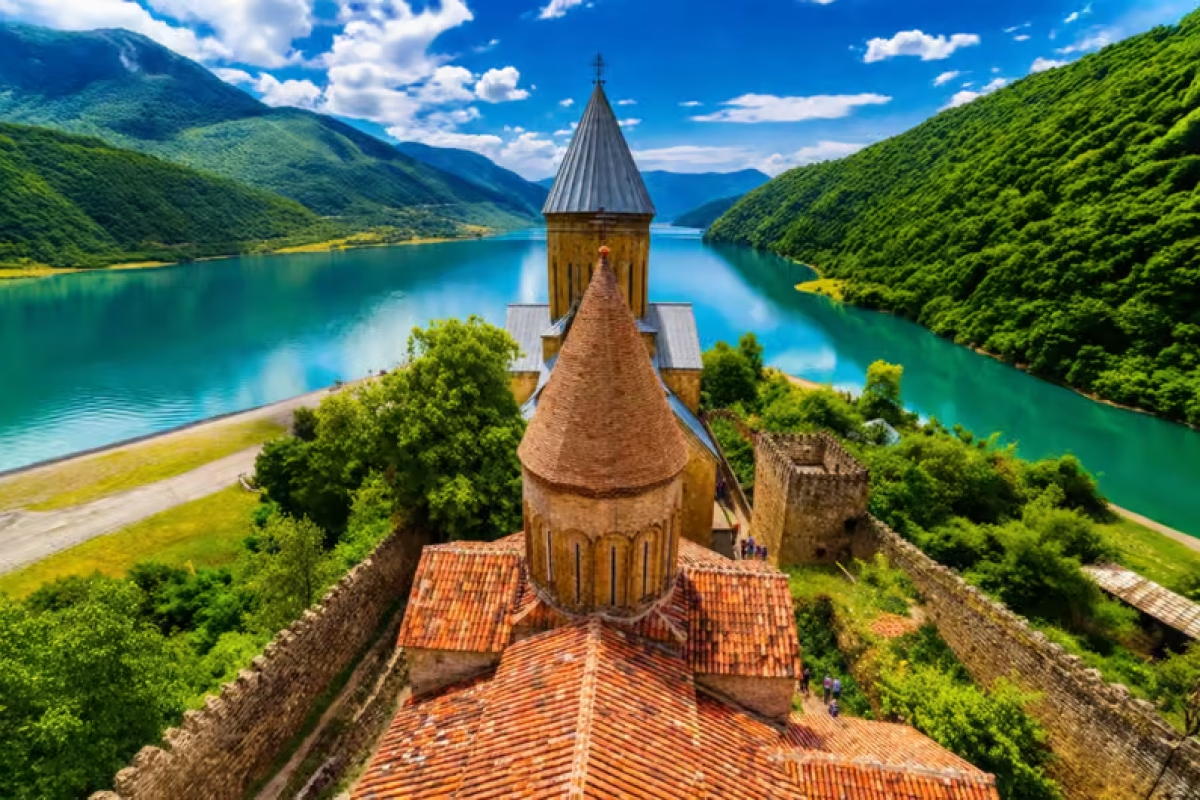
For one of the easiest accessible views, combine the reservoir with Ananuri Fortress. Georgia Travel states that Ananuri stands on the shore of the Zhinvali Reservoir and offers views across the water.
Many Kazbegi group tours combine Zhinvali, Ananuri, Gudauri and Stepantsminda in one itinerary. Travelling independently gives you more control over how long you spend at each viewpoint.

Why Was Zhinvali Reservoir Created?

The Zhinvali Reservoir was not built as a tourism project. Its history is linked to major water and hydroelectric infrastructure.

Georgia Travel dates the construction of the Zhinvali hydrocomplex to 1985. The same official source notes that a 12th-century Church of the Holy Cross was flooded during the creation of the hydrocomplex and can become visible when the water level drops. 

This explains one of the more confusing things about photographs of Zhinvali.

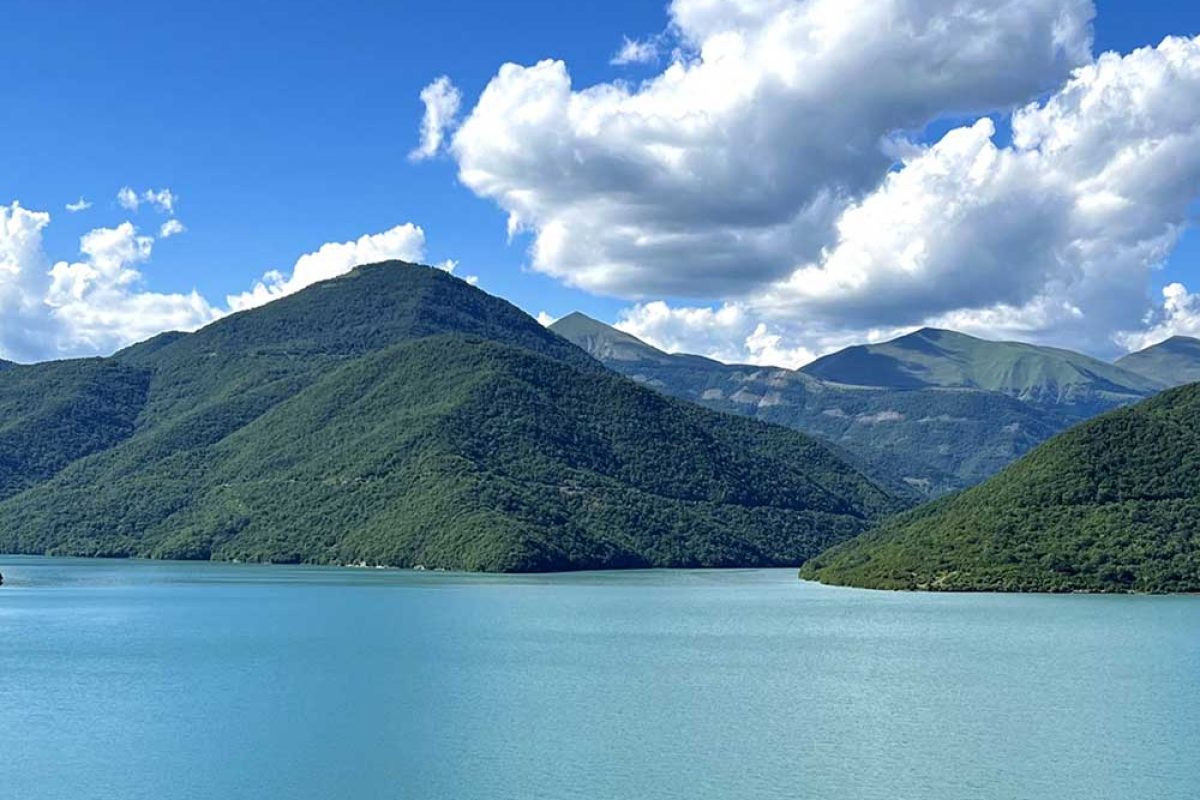
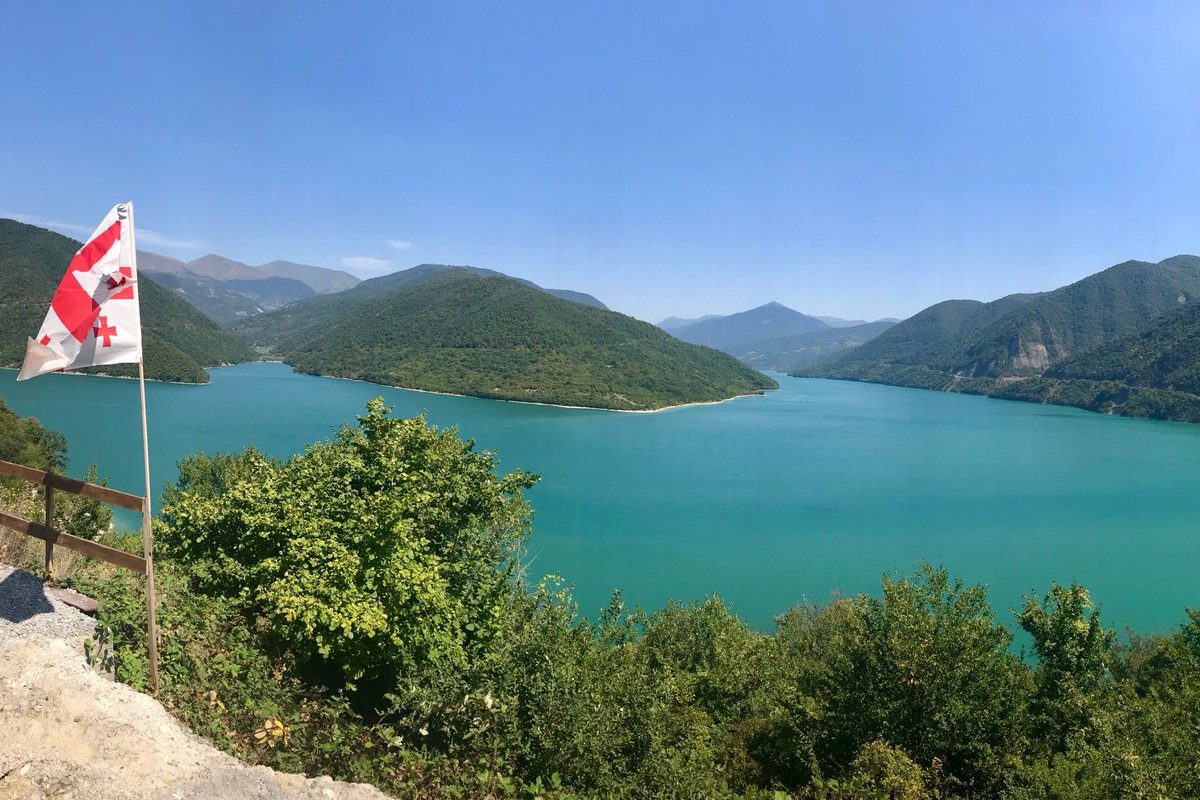
In summer, you may see broad stretches of water extending between green slopes. At lower water levels, exposed banks change the shape and colour of the shoreline. In winter, reduced water levels can reveal the submerged church mentioned in the official tourism material. 

Two photographs taken from similar areas in different seasons can therefore look surprisingly different.

Jinvali Water Reservoir

What Can You Do at Zhinvali Reservoir?

The most straightforward combination is Zhinvali Reservoir and Ananuri Fortress.

Ananuri stands directly by the reservoir, making it possible to see the historical complex and the water during the same stop. Georgia Travel also mentions picnic tables and boat rental by the shore, although the current or seasonal availability of these services should be confirmed locally. 

Kayaking is also offered through organised local activity providers. Georgia Travel lists kayaking on Zhinvali Reservoir among the activities available through the Aragvi Adventure Center. Another official tourism page also mentions fishing, cycling, hiking and kayaking around the reservoir. 

That does not mean every visible section of shoreline is a suitable access point.

For activities, use an organised access point or confirm your location in advance. For photographs, find a safe place to park. Stopping suddenly on a mountain highway because the water looks good from the driver’s seat is not a sensible travel strategy.

When Is the Best Time to Visit Zhinvali Reservoir?

Zhinvali Reservoir changes noticeably with the seasons.

Georgia Travel includes Zhinvali among places highlighted for autumn scenery, when vegetation around reservoirs changes colour. In winter, a lower water level can reveal parts of the flooded historical landscape, including the church mentioned in the official Zhinvali cycling route. 

For a simple roadside viewpoint, you do not need an entire day. Fifteen to thirty minutes may be enough.

When combined with Ananuri Fortress, allow at least an hour or more. One of the common mistakes on the Kazbegi road is turning Zhinvali, Ananuri, Gudauri and every other stop into a ten-minute photography exercise.

The reservoir fits naturally into private Kazbegi tours and longer multi-day tours in Georgia.

My practical advice is not to treat the first visible viewpoint as the entire Zhinvali experience. Continue along the route and watch how the shape of the reservoir changes between the slopes. The scale of the water becomes much clearer when you see it from several sections of the road rather than from one fixed point.

Jinvali lake