Tbilisi has an affordable public transportation network that includes underground metro trains, municipal buses, minibuses and several cable cars. Whether you are exploring Old Tbilisi, visiting museums along Rustaveli Avenue or traveling from the airport, getting around Georgia’s capital is relatively straightforward without renting a car.
Public transport in Tbilisi costs 1 GEL for 90 minutes of unlimited travel on the metro, municipal buses, minibuses and the Bagebi–University cable car when using an eligible payment card.
Visitors can pay with a Metromoney card or a compatible contactless bank card, while daily and longer-term transport passes are also available.
This guide explains everything you need to know about Tbilisi’s public transportation system, including ticket prices, metro stations, bus routes, payment methods and practical travel tips.
Last fact-checked: November 17, 2026. Fares and operating hours are subject to change in 2027.
|
Information |
Details |
|
Standard fare |
1 GEL |
|
Free transfer period |
90 minutes with eligible payment methods |
|
Metro lines |
2 |
|
Metro stations |
23 |
|
Metro operating hours |
06:00–00:00 |
|
Metromoney card |
2 GEL |
|
One-day pass |
3 GEL |
|
One-week pass |
20 GEL |
|
Airport bus |
No. 337 |
|
Driving side |
Right |
|
Official transport operator |
Tbilisi Transport Company |
Tbilisi’s integrated fare system allows travelers to combine different forms of municipal transportation without purchasing a separate ticket for every connection within the applicable 90-minute period.
Tbilisi Transport Company operates an integrated fare system with both short-term fares and transport subscriptions.
The current published standard tariffs are:
|
Ticket or transport pass |
Price |
|
90-minute travel |
1 GEL |
|
1-day pass |
3 GEL |
|
1-week pass |
20 GEL |
|
1-month pass |
40 GEL |
|
3-month pass |
100 GEL |
|
6-month pass |
150 GEL |
|
1-year pass |
250 GEL |
|
Metromoney or Subscription Card |
2 GEL |
The 90-minute fare covers:
Tourist cable cars connecting Rike Park with Narikala Fortress and Vake Park with Turtle Lake have separate fares.
The 90-minute period starts when you first validate your payment card.
For example, if you enter the metro at 10:00, transfer to a municipal bus at 10:25 and board another bus at 11:10, all three journeys fall within the same 90-minute fare period.
You must validate the same payment card every time you board a vehicle or enter the metro, even when transferring within the free transfer period.
Once the 90-minute period expires, your next journey starts a new paid period.
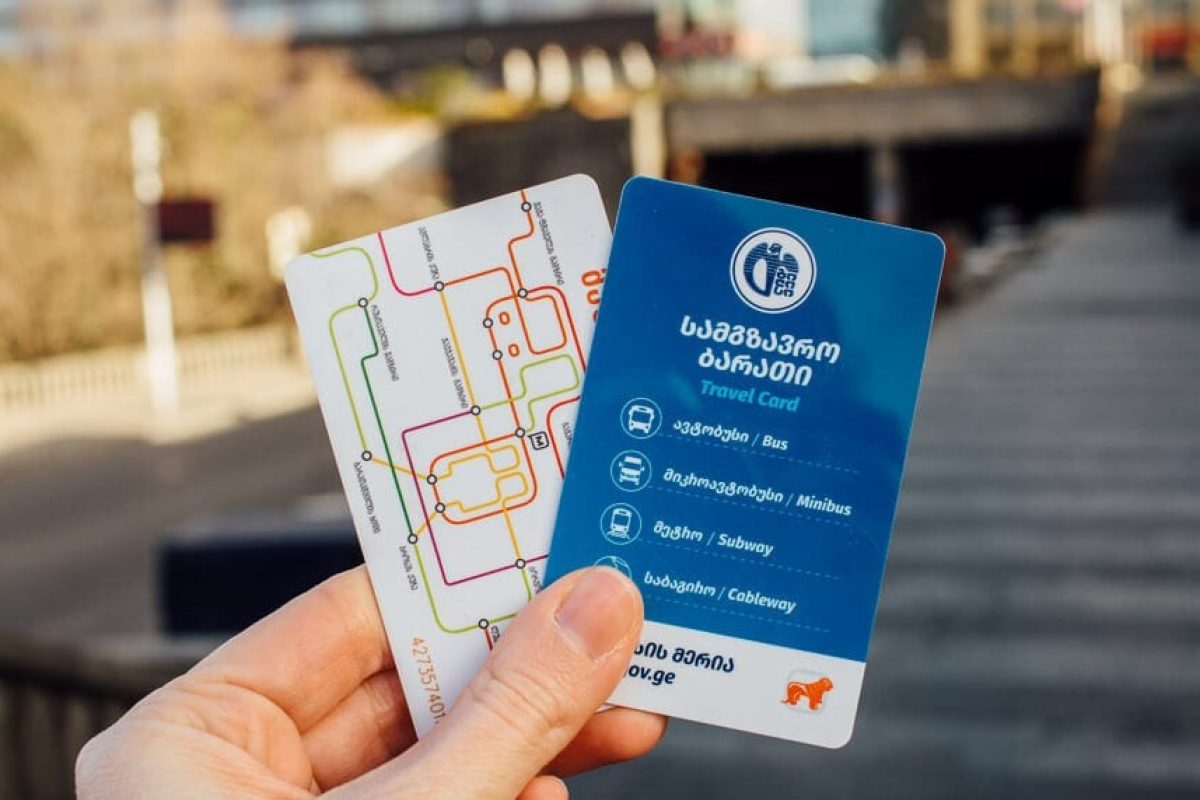
Travelers have three main card-based payment options: Metromoney, compatible contactless bank cards and subscription cards.
Metromoney is a reusable, rechargeable transport card suitable for tourists and occasional public transport users.
The card costs 2 GEL and does not require personal identification when purchasing it.
You can buy or recharge a Metromoney card at:
Load money onto the card according to your expected transportation needs and tap it on the electronic validator whenever you travel.
According to Tbilisi Transport Company, the 2 GEL card purchase price can be refunded if the card is returned within one month and the original purchase receipt is presented.
Keep your receipt, as it is also required when requesting assistance with a lost card or transferring its remaining balance under the operator’s applicable conditions.
Source: Tbilisi Transport Company – Metromoney Card.
Visitors can also use compatible contactless bank cards to pay for municipal transportation without purchasing a separate Metromoney card.
Simply tap your bank card at the metro entrance or on the electronic validator inside a bus or minibus.
International bank card compatibility and additional transaction or currency conversion fees may vary.
For this reason, carrying a Metromoney card as a backup can be useful.
If you are traveling with other people, using a separate payment card for each passenger is the simplest way to manage individual fares and transfers.
A subscription card is designed for passengers purchasing unlimited-travel packages, including daily, weekly and monthly passes.
The card itself costs 2 GEL, in addition to the selected subscription.
|
Card |
Best for |
Payment system |
|
Metromoney |
Tourists and occasional journeys |
Rechargeable balance |
|
Contactless bank card |
Convenient individual journeys |
Direct bank payment |
|
Subscription Card |
Frequent transportation use |
Prepaid travel package |
Daily and longer-term passes can only be purchased using a Subscription Card. A standard Metromoney card is not the same as a subscription card.
The transport operator also states that payments made through its mobile application or in cash, where supported, do not qualify for the 90-minute unlimited travel package.
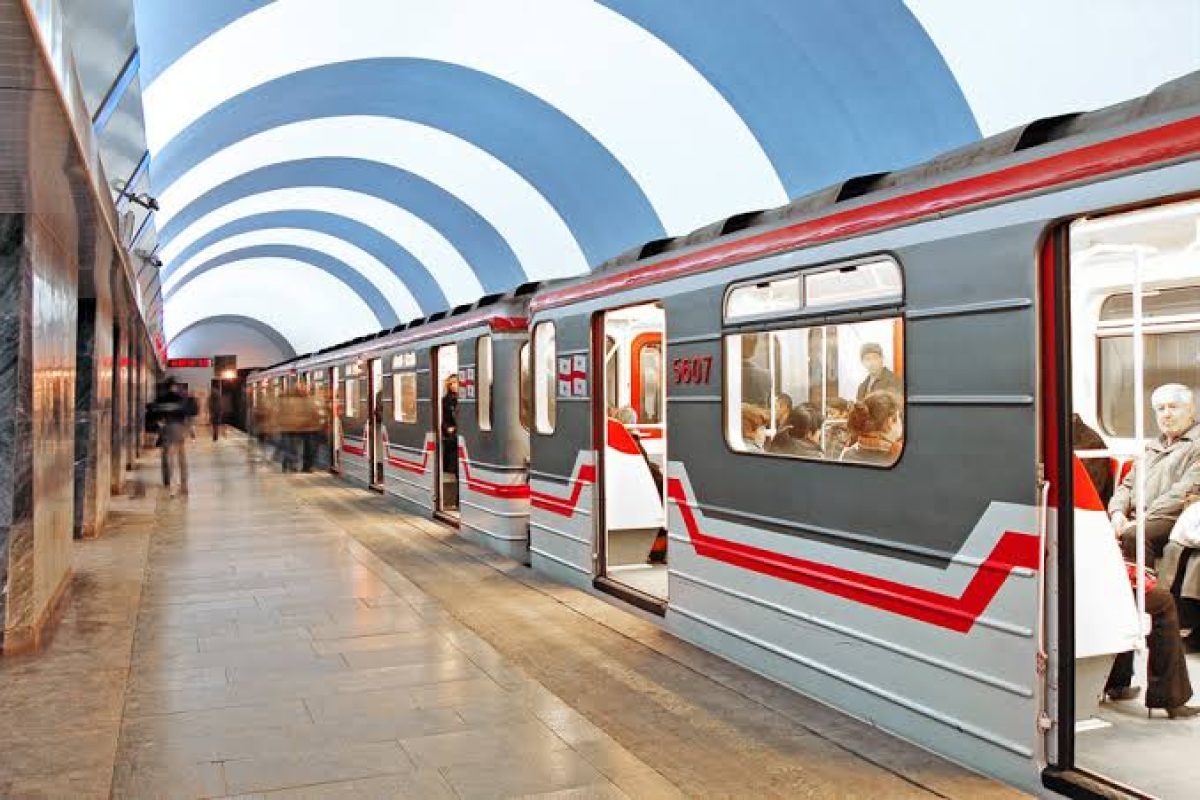
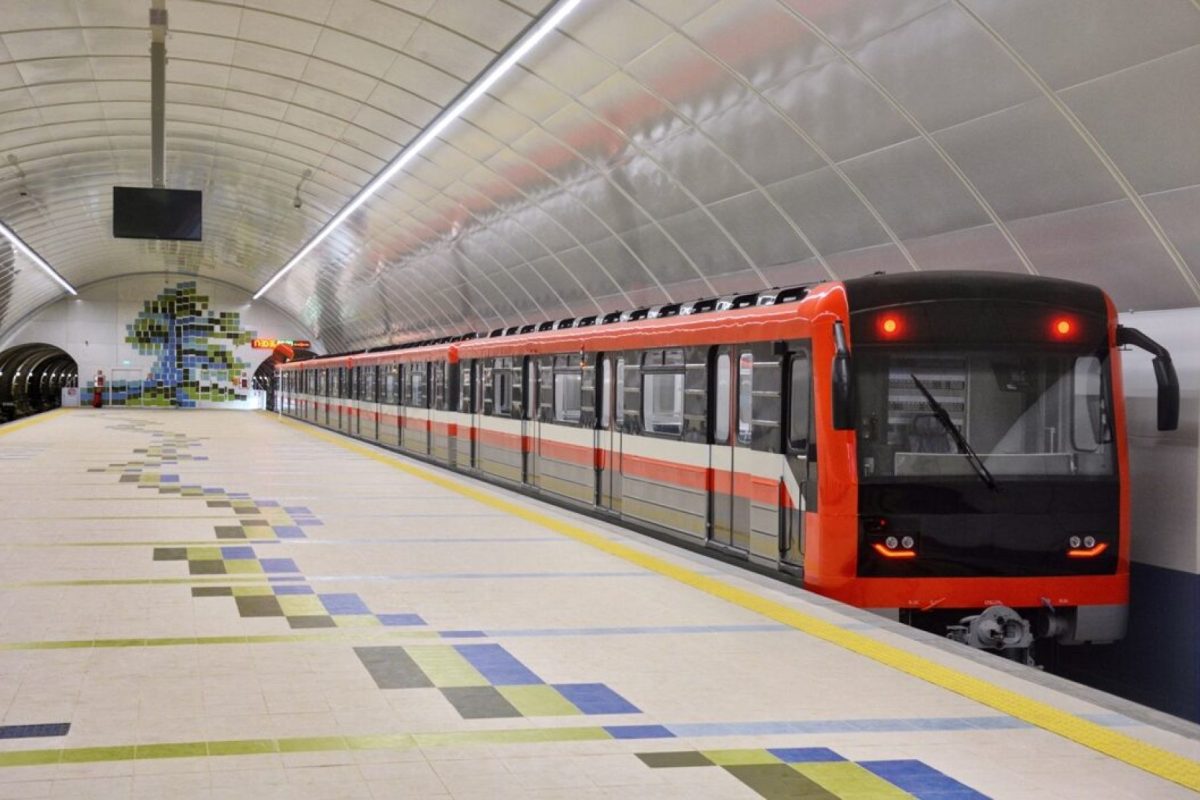
The Tbilisi Metro is one of the most efficient ways to travel across the city, particularly during busy traffic periods.
Opened in 1966, the underground railway connects residential neighborhoods, commercial districts, railway stations and several popular tourist areas.
The network consists of two lines and 23 stations.
|
Information |
Details |
|
Opening time |
06:00 |
|
Closing time |
00:00 |
|
Operating days |
Monday–Sunday |
|
Standard fare |
1 GEL |
|
Transfer station |
Station Square |
The metro does not normally operate throughout the night. Special operating hours may apply during major holidays or public events.
Source: Georgia Travel – Opening Hours in Georgia.
The first metro line connects northern and southeastern Tbilisi, passing through the city center and several important transport hubs.
Stations:
This line is particularly useful for visitors staying in central Tbilisi or traveling to regional bus and railway stations.
The second line connects Station Square with the Saburtalo residential and commercial district.
Stations:
Passengers can transfer between the two metro lines at Station Square without leaving the paid metro area.
Before traveling, consult the current metro network map through the Tbilisi Transport Company or its official mobile application.
The map is especially useful when choosing accommodation, planning day trips or navigating between Tbilisi’s central districts and transport hubs.
|
Metro station |
Nearby attractions and transport connections |
|
Liberty Square |
Freedom Square, Sololaki, Georgian National Museum, Old Tbilisi |
|
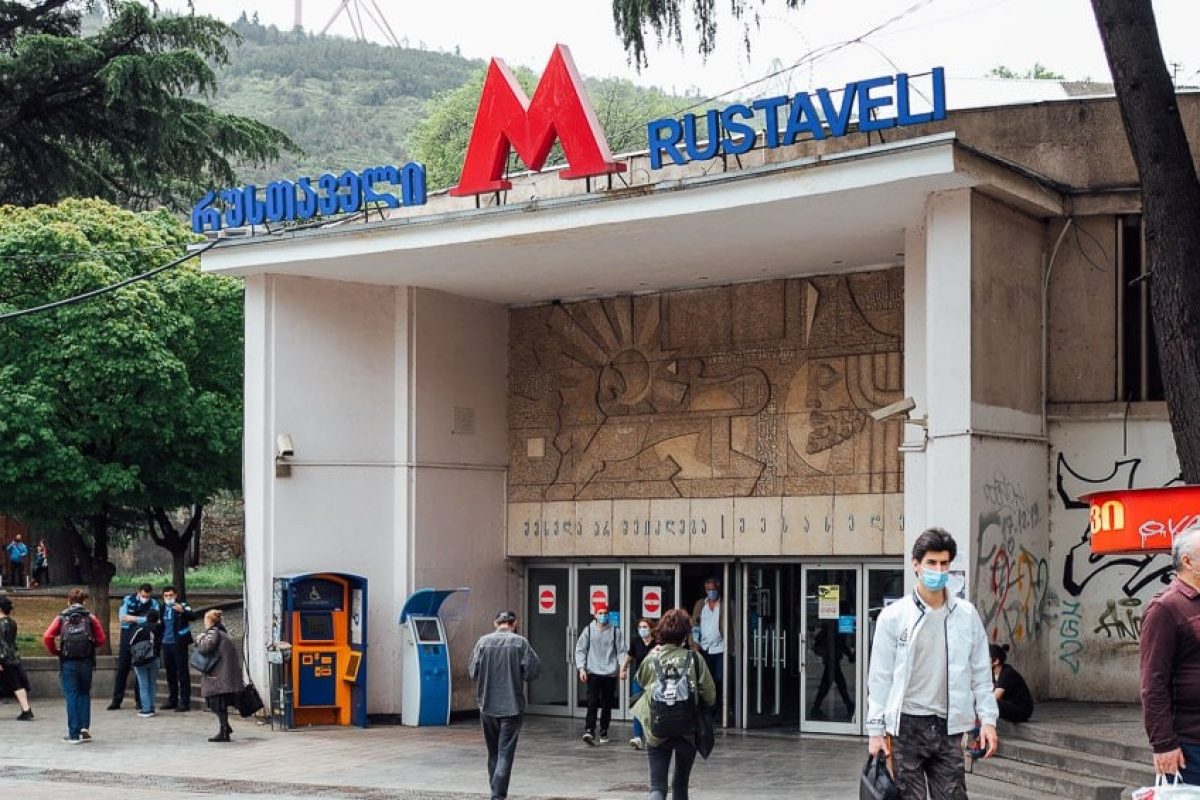
Rustaveli |
Rustaveli Avenue, Vera, cultural attractions |
|
Avlabari |
Sameba Cathedral, Metekhi, Rike Park |
|
Marjanishvili |
Aghmashenebeli Avenue, Fabrika, Chugureti |
|
Station Square |
Tbilisi Central Railway Station, intercity transportation |
|
Didube |
Regional minibuses toward Kazbegi, Gudauri and other destinations |
|
Samgori |
Regional transportation toward parts of Kakheti |
|
Technical University |
Saburtalo, Sports Palace |
|
Medical University |
Residential and commercial areas of Saburtalo |
You do not need to validate your card again when leaving the metro station.
Some stations are located deep underground and require long escalator journeys. Metro accessibility varies, so passengers with specific mobility requirements should check station facilities before traveling.
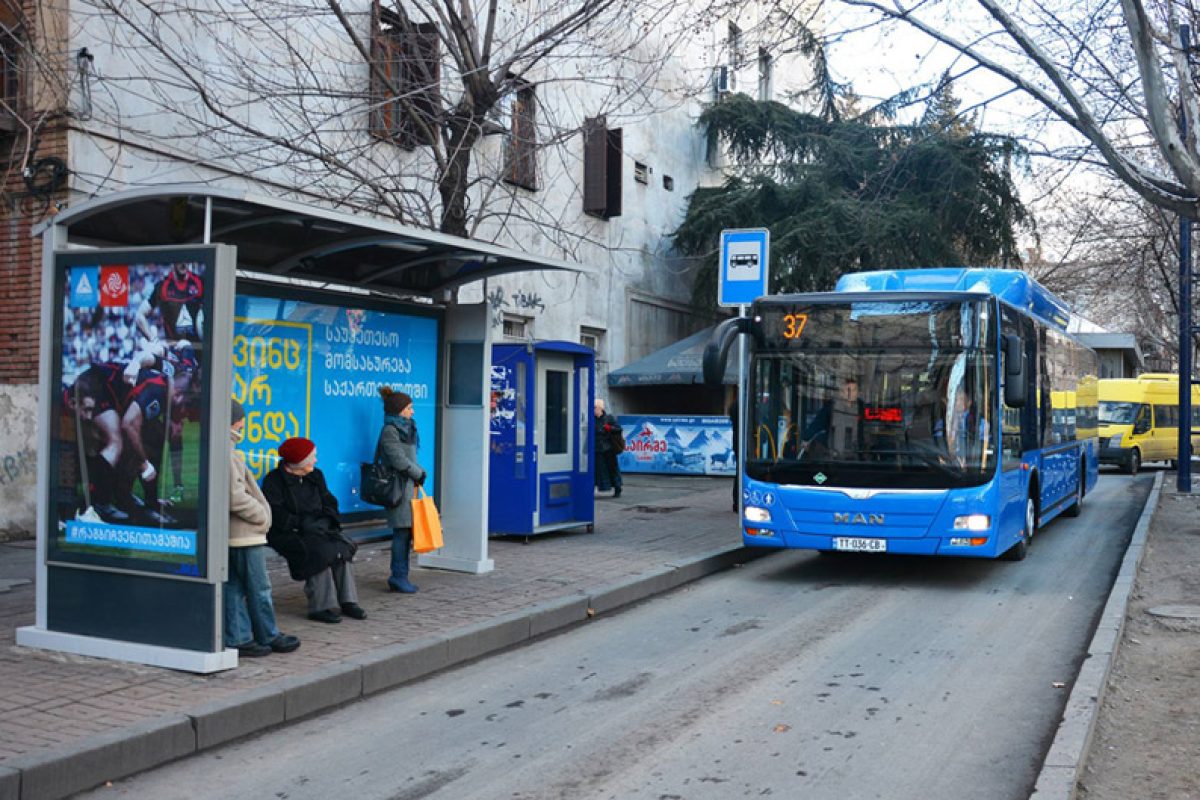
Tbilisi’s municipal bus network reaches neighborhoods and attractions that are not directly connected to the metro.
Buses are particularly useful for traveling to Vake, Vera and residential areas located away from underground stations.
The standard municipal bus fare is 1 GEL, with the same eligible 90-minute transfer system used by the metro.
Passengers validate their cards at electronic payment machines inside the vehicle.
Municipal public transport generally operates from early morning until late evening.
Georgia’s official tourism portal lists general public transport hours of 07:00–23:00. However, individual bus routes have different first and last departures.
Always check the timetable for your specific route, especially when traveling early in the morning or late at night.
Tbilisi’s buses display their route numbers and destinations. Many bus stops also have electronic information boards showing upcoming arrivals.
For route planning, use the official transport application or online journey planner to identify:
Check live routes instead of relying exclusively on older screenshots or travel guides. Roadworks and temporary street closures can change bus routes and stops.
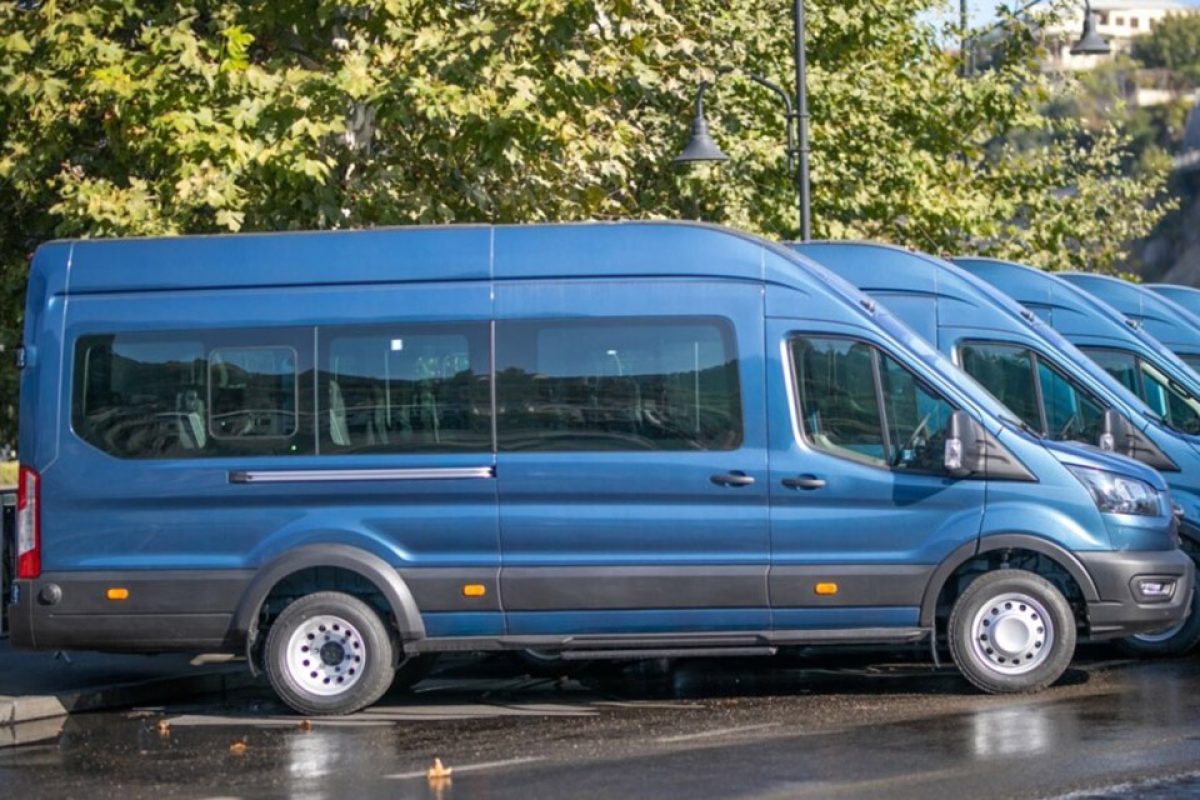
Marshrutkas are smaller passenger vehicles that supplement the city’s larger municipal buses and metro network.
They provide connections to residential streets and areas where larger buses may be less practical.
Municipal minibuses are included in Tbilisi’s integrated 90-minute fare system when passengers use eligible payment methods.
|
Municipal minibuses |
Intercity minibuses |
|
Operate within Tbilisi |
Connect cities, towns and villages |
|
Integrated municipal fares |
Separate route-based fares |
|
Electronic card payment |
Payment depends on the operator |
|
Part of the city transport network |
Separate regional transport services |
This distinction is important when traveling beyond Tbilisi.
Your municipal transport pass does not cover a regional marshrutka from Tbilisi to Kazbegi, Kutaisi or Sighnaghi.
For longer journeys, read our complete guide to getting around Georgia.
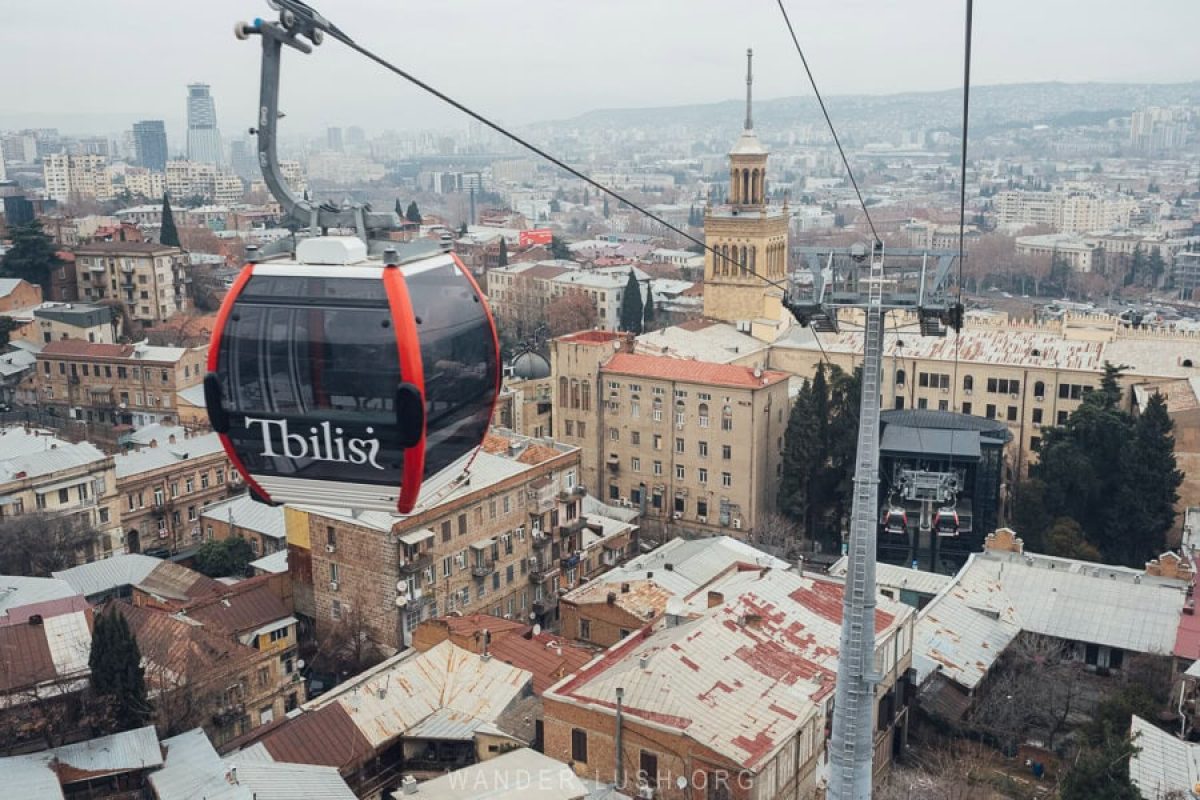
Tbilisi’s hilly landscape has made cable cars an important part of the city’s transportation and sightseeing infrastructure.
Several routes offer convenient connections between lower and higher parts of the city, together with impressive panoramic views.
|
Cable car |
Route |
Fare |
|
Rike–Narikala |
Rike Park to Narikala hill |
2.50 GEL |
|
Turtle Lake |
Vake Park to Turtle Lake |
1 GEL |
|
Bagebi–University |
Bagebi to Tbilisi State University |
Integrated municipal fare |
Prices for Rike–Narikala and Turtle Lake are for one-way journeys.
The Rike–Narikala cable car is one of Tbilisi’s most popular visitor attractions.
It connects Rike Park on the left bank of the Mtkvari River with the hill overlooking Old Tbilisi, providing access to the Mother of Georgia monument and panoramic viewpoints.
The one-way fare is 2.50 GEL.
Although the Metromoney card is accepted, this cable car is not included in the standard 90-minute municipal fare.
Operating hours may change seasonally, and temporary maintenance closures are possible.
If you prefer to discover the historic city with a local guide, our Tbilisi Group Walking Tour includes a cable car ride, Old Tbilisi sightseeing and traditional Georgian bakery treats.
The Turtle Lake cable car connects Vake Park with one of Tbilisi’s popular recreational areas.
The journey takes approximately six minutes, according to Georgia’s official tourism portal.
The published one-way fare is 1 GEL.
Turtle Lake is a pleasant destination for walking, relaxing outdoors and enjoying views of the surrounding city.
This cable car connects the Bagebi residential area with the Maghlivi building of Tbilisi State University.
Unlike the two tourist-oriented cable cars above, it is covered by the integrated municipal transport fare.
The Mtatsminda Funicular connects central Tbilisi with Mtatsminda Park, located above the city.
It is a separate service with its own ticketing arrangements and is not covered by the standard municipal transport pass.
Check current ticket prices directly with the operator before visiting.
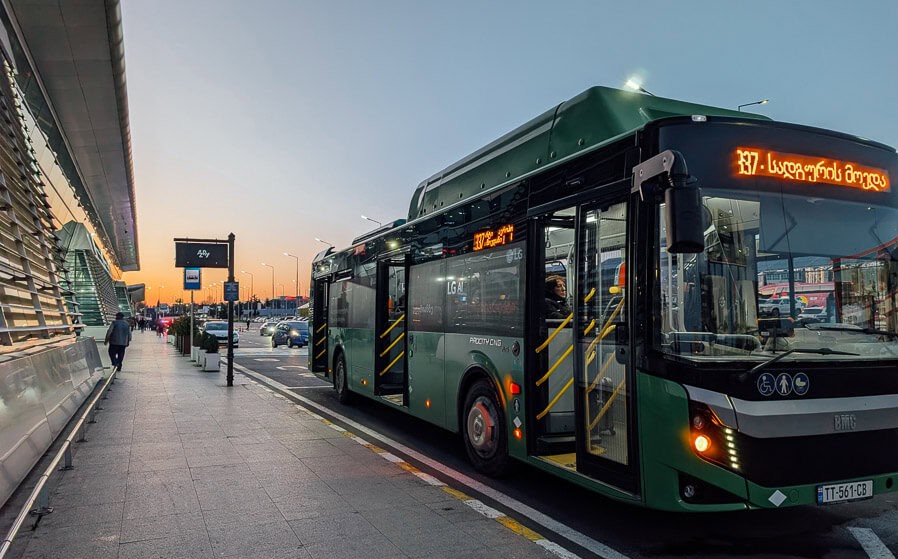
Municipal bus No. 337 connects Tbilisi International Airport with central Tbilisi and Station Square.
It is the most economical confirmed transportation option for passengers arriving at the airport during its operating hours.
|
Airport bus information |
Details |
|
Bus number |
337 |
|
Standard fare |
1 GEL |
|
Published operating hours |
06:59–22:59 |
|
Airport departure point |
Outside the Arrivals Hall |
|
City terminus |
Station Square |
|
Overnight service |
No |
The regular route serves several important central areas, including Queen Ketevan Avenue, Baratashvili Street and Rustaveli Avenue, subject to temporary route adjustments.
There is no direct metro connection to Tbilisi International Airport.
If your flight arrives outside the bus operating hours, an airport taxi, available ride-hailing service or pre-booked private transfer is a practical alternative.
For comfortable door-to-door transportation, explore our private airport transfers.
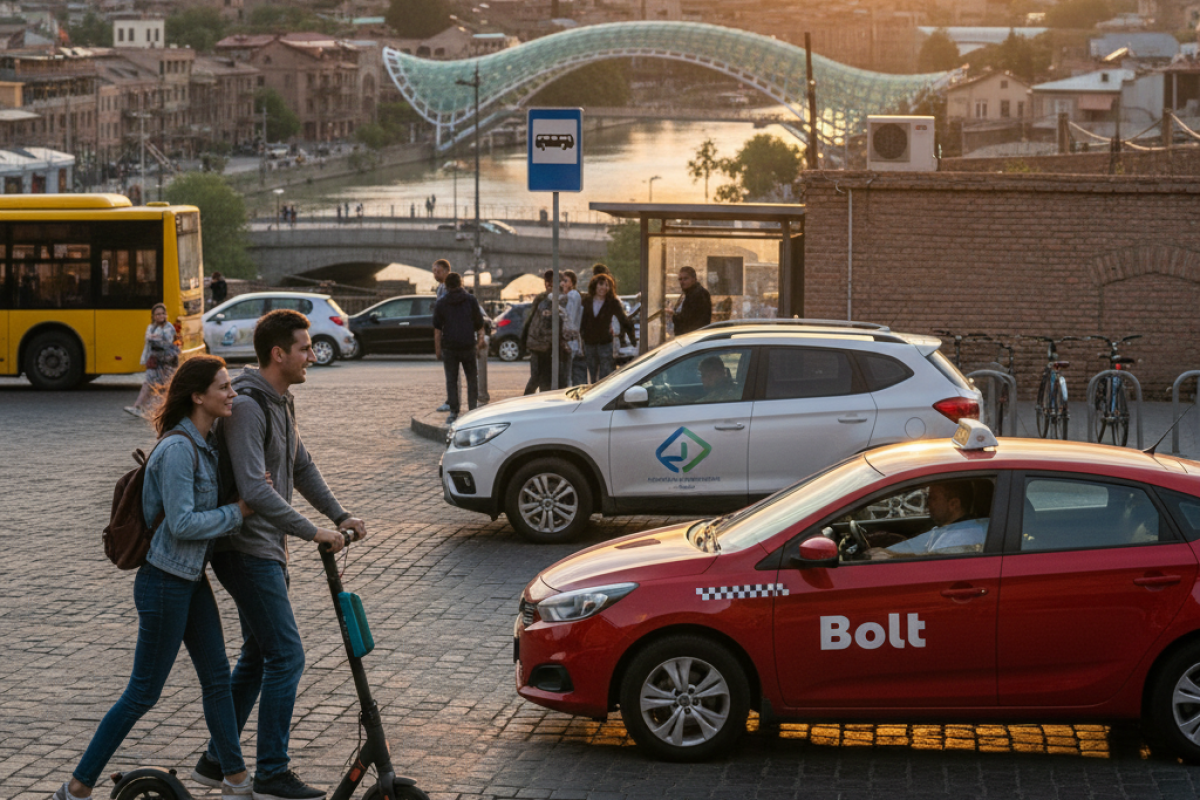
Using digital navigation tools can make traveling around Tbilisi easier, particularly if you are unfamiliar with Georgian street names or public transport routes.
The official transport application provides information about the municipal transport network, including bus routes, metro lines, stops and timetables.
Available features include:
Find additional information through the official TTC mobile application page.
The official journey planner helps passengers find public transportation connections between different parts of Tbilisi.
Website: Tbilisi Transit Planner.
Google Maps is useful for locating metro stations, identifying nearby attractions and planning walking routes.
Public transport directions can also assist with navigation, but temporary route changes may not always be reflected immediately.
Use TTC information to confirm your journey when there is a discrepancy between navigation applications and official schedules.
Bolt is a useful alternative when traveling with luggage, visiting locations without convenient public transport connections or returning to your accommodation late at night.
Ride prices vary according to demand, destination, traffic and vehicle category.

Many of Tbilisi’s most popular attractions are within walking distance of a metro station or a municipal bus stop.
|
Attraction |
Nearest useful transport connection |
|
Freedom Square |
Liberty Square metro |
|
Georgian National Museum |
Liberty Square metro |
|
Abanotubani sulfur baths |
Avlabari or Liberty Square metro, followed by walking |
|
Bridge of Peace |
Liberty Square or Avlabari metro |
|
Rike Park |
Avlabari metro |
|
Mother of Georgia |
Rike–Narikala cable car |
|
Sameba Cathedral |
Avlabari metro |
|
Fabrika Tbilisi |
Marjanishvili metro |
|
Dry Bridge Market |
Metro and walking, or municipal bus |
|
Vake Park |
Municipal bus |
|
Turtle Lake |
Cable car from Vake Park |
|
Mtatsminda Park |
Funicular or municipal bus |
|
Tbilisi Central Railway Station |
Station Square metro |
|
Tbilisi International Airport |
Bus 337 |
When planning your journey, consider Tbilisi’s hilly terrain. A short walking distance on a map can involve steep streets or staircases.
The most economical payment option depends on how frequently you expect to use public transportation.
|
Length of stay |
Suggested payment option |
|
1–2 days |
Bank card or Metromoney |
|
One day with frequent journeys |
1-day subscription |
|
3–5 days |
Metromoney or bank card |
|
1 week |
Weekly pass or pay-as-you-go, depending on usage |
|
1 month or longer |
Monthly subscription for frequent travelers |
The 3 GEL daily pass costs the same as three separate 90-minute fare periods.
If you already own a subscription card and expect to use more than three paid travel periods throughout the day, the daily pass can offer better value.
However, purchasing a new subscription card adds another 2 GEL to your initial cost.
The weekly subscription costs 20 GEL, equivalent to twenty standard 90-minute fare periods.
Visitors who primarily explore Old Tbilisi on foot and use public transport occasionally may spend less by paying for individual journeys.
For regular commuters and long-stay travelers, monthly subscriptions may provide better value.
Choose a pass based on the number of separate paid travel periods you expect to use, not simply the number of buses or metro trains you board.

Tbilisi’s metro provides access to several major departure points for regional transportation.
Station Square metro station connects passengers with Tbilisi Central Railway Station, where trains depart toward Batumi and other destinations.
It is also useful for accessing selected intercity bus services.
Didube metro station is located near a major regional transport hub.
Visitors can find minibuses serving destinations such as Mtskheta, Gudauri, Kazbegi and other parts of Georgia.
Confirm the exact departure point and schedule with the relevant operator.
Avlabari is a convenient meeting location for organized tours departing from central Tbilisi.
For example, the Gamarjoba Georgia Tours Tbilisi Walking Tour meets in front of Avlabari metro station.
If you have booked an excursion, check the departure location and meeting time in your booking confirmation.
Explore our group tours from Tbilisi for organized trips to Georgia’s mountain regions, wineries and historical landmarks.
A few simple preparations will make your experience with Tbilisi’s public transport network more convenient.
Public transportation works particularly well when combined with walking around the historic center and occasional taxi journeys to locations farther from the metro network.
The standard fare is 1 GEL for 90 minutes of eligible travel on the metro, municipal buses, minibuses and the Bagebi–University cable car. Daily passes cost 3 GEL.
Compatible contactless bank cards are accepted. International card compatibility and transaction fees may vary, so purchasing a Metromoney card for 2 GEL is a useful alternative.
No. The metro normally operates from 06:00 to midnight, while bus and minibus schedules vary by route. Taxis and ride-hailing services are alternatives outside regular public transport hours.
Yes. The Metromoney card works across the municipal transport network and is accepted on the Rike–Narikala cable car. However, the Rike–Narikala and Turtle Lake cable cars have separate fares and are not included in the ordinary 90-minute travel package.
Tbilisi's public transport system offers an affordable and convenient way to explore Georgia's capital.
The metro is particularly useful for longer journeys across the city, municipal buses connect neighborhoods beyond the underground network, and cable cars provide both transportation and scenic sightseeing experiences.
For most short-term visitors, a Metromoney card or compatible bank card provides sufficient flexibility without purchasing a longer-term travel subscription.
When you are ready to explore beyond the capital, Gamarjoba Georgia Tours offers guided excursions, private tours and transportation services across Georgia.