Gergeti Trinity Church: History and Practical Visitor Guide
June 23, 2026
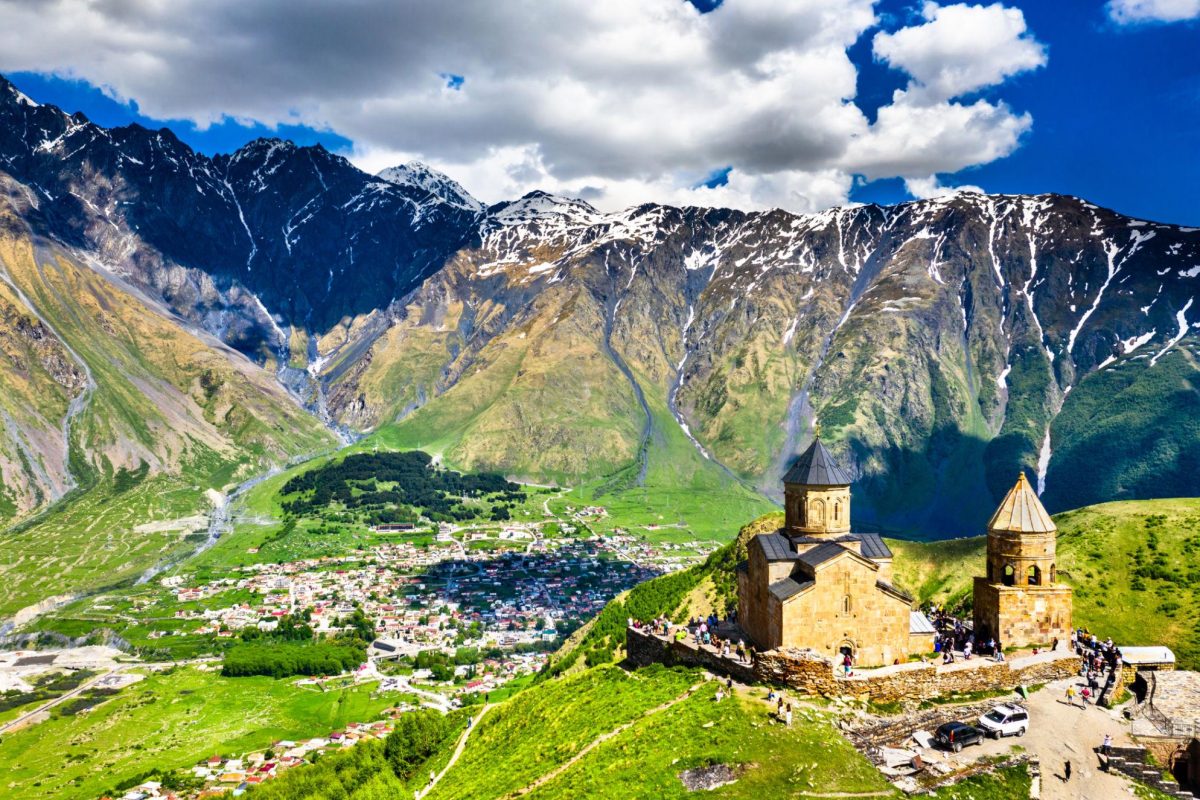
Gergeti Trinity Church is a 14th-century Georgian church standing above Stepantsminda in the Greater Caucasus. Located at roughly 2,200 metres above sea level, the church is visible from many parts of town whenever low cloud does not cover the hillside. Georgia’s official tourism platform dates the church to the 14th century and lists it as a cultural and religious site in Stepantsminda, Mtskheta-Mtianeti.
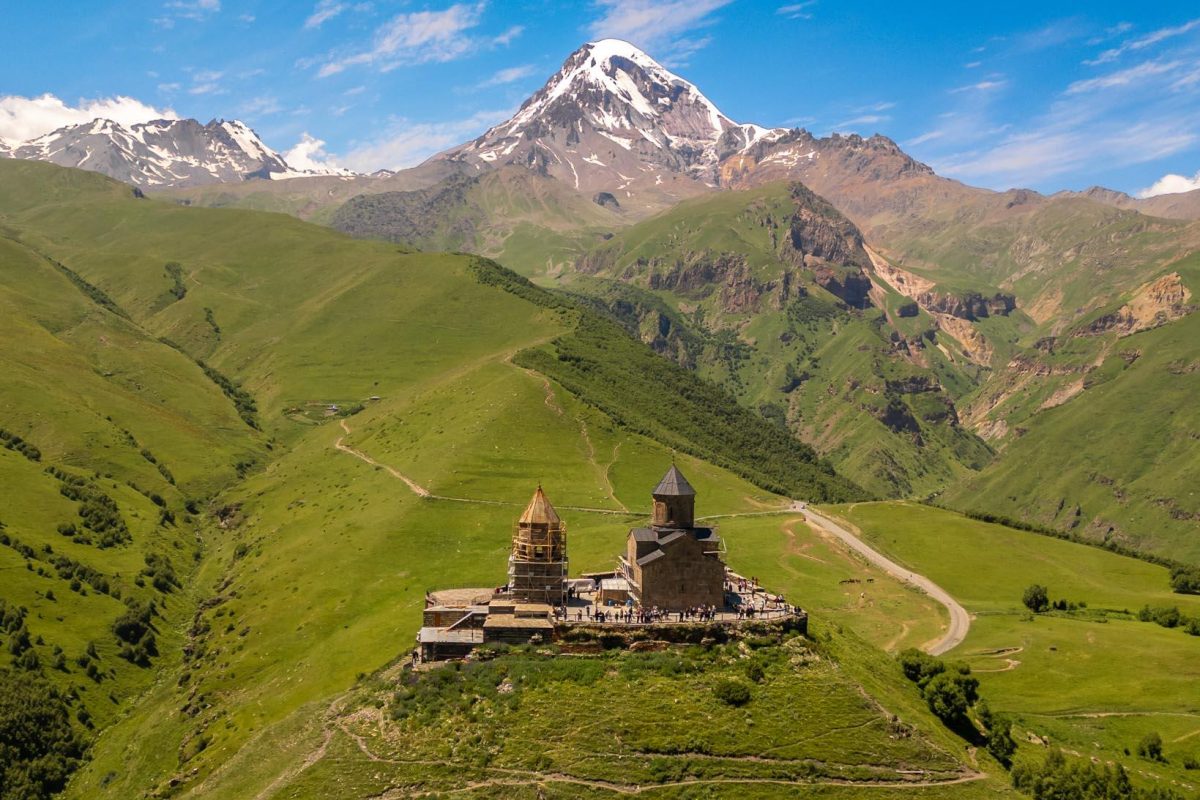
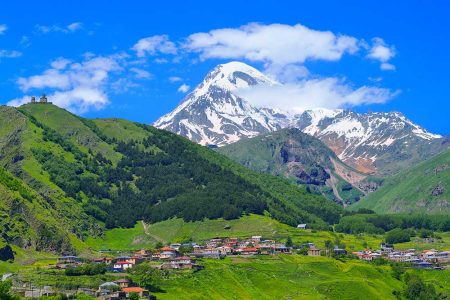
In photographs, Gergeti Trinity Church often appears to sit directly beneath Mount Kazbek. Once you reach the hill, the geography becomes easier to understand. Stepantsminda and the Terek Valley lie below, while the higher mountain terrain stretches behind the church.
The History of Gergeti Trinity Church
The church was built during the 14th century and is an important example of medieval Georgian church architecture. Its isolated position also had a practical role in the past. According to Georgia’s official tourism website, church treasures were kept at Gergeti during enemy invasions because reaching the site was extremely difficult.
Today, Gergeti Trinity Church remains a religious site, not simply a viewpoint or photography location. Visitors should keep this in mind before entering the church. Knees and shoulders should be covered when visiting an Orthodox church, and women are generally expected to cover their hair.
The stone exterior is far more detailed when viewed from close range than it appears from Stepantsminda. Give yourself time to walk around the complex rather than heading directly from the car park to the entrance and back.
How to Get to Gergeti Trinity Church
You can reach the church from Stepantsminda by car or on foot. A paved access road now connects the town with the church; Georgian road authorities completed a 5.6-kilometre access road project in 2018.
Walking to Gergeti Trinity Church is also popular. Gamarjoba Georgia Tours describes the uphill walk as taking around 30–40 minutes and classifies it as intermediate. Detailed hiking guides give longer estimates for some routes, so your actual walking time depends heavily on the trail, pace, and number of stops.
A useful detail for hikers: do not blindly follow the first visible track across the hillside. Several paths appear on the grassy slope, and some are considerably steeper or rougher than others. Loose stones can be particularly uncomfortable on the descent. An updated local hiking guide specifically warns that choosing the correct path makes a major difference to the walk.
Weather and the Best Time to Visit
The biggest variable at Gergeti Trinity Church is weather. Clouds move quickly through the mountain valley. You may see the church clearly from Stepantsminda, start walking, and arrive in mist less than an hour later.
During periods of winter snow and ice, the hiking route may become difficult or temporarily impractical. In peak summer, the climb can feel warmer and more tiring during the middle of the day.
For walking, carry water, use proper shoes, and bring a light outer layer even when Stepantsminda feels comfortable. Do not rely on finding a full café or restaurant at the top; facilities around the church are limited.
My practical advice is not to treat Gergeti Trinity Church as a 15-minute photo stop. Walk around the perimeter and look back towards Stepantsminda. The scale of the valley is much clearer from here than from the church entrance itself.
And when Mount Kazbek disappears behind cloud, wait before giving up. Mountain weather changes quickly. Twenty minutes with a coffee or water can sometimes produce a completely different view.